


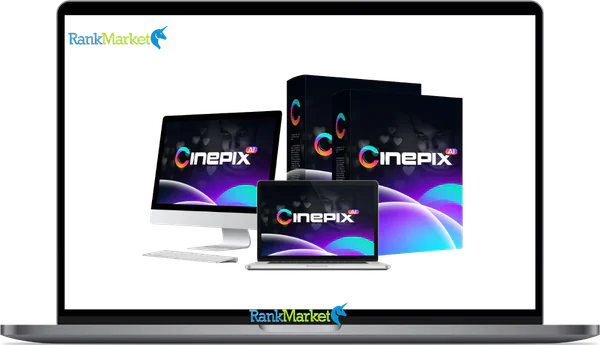
Buy CINEPIX AI + OTOs full account + Bonus
$15.00
CINEPIX AI is a cloud-based AI showrunner that transforms a single prompt into a complete multi-episode video series with automated scripts, visuals, voiceovers, and editing.
| Deliver | CINEPIX AI + OTOs |
|---|---|
| Access | Shared |
| Type | AI video showrunner |
| Plan | FE + OTOs |
| Details | GB Details |
CINEPIX AI + OTOs - Overview
CINEPIX AI is a cloud-based AI production studio that turns a single text prompt into a fully edited multi-episode video show, complete with script, scenes, voiceover, music, and final exports. It positions itself as an AI showrunner, not just another video generator. Where most AI video tools handle one scene at a time, CINEPIX AI is built to deliver a whole series of episodes from one creative brief.
This guide is written for YouTubers, streamers, marketers, educators, and agencies who need to produce more video, faster, without scaling a traditional production team. The platform tackles three big pain points: production crew cost, the time burden of manual scripting and editing, and the technical learning curve of professional editing tools. Based on hands on testing and comparison with tools like Runway, Pika, Synthesia, and InVideo AI, this guide gives an honest 2026 view of what CINEPIX AI does well and where it still has limits.
Here is the snapshot of what you will learn:
- A precise definition of CINEPIX AI and the problems it solves
- The full prompt to show workflow, step by step
- Core features including multilingual voiceover, cinematic visuals, and smart editing
- Comparisons with the leading AI video tools of 2026
- Honest pros, cons, and pricing context
- A full FAQ for buying decision support
Illustrative metrics shared by the platform community suggest thousands of active users and well over a million AI generated videos to date, with support for 70 plus languages. Numbers like these evolve quickly, so always check the latest figures on the official site.
Quick Overview of CINEPIX AI at a Glance

CINEPIX AI is a cloud-based AI showrunner that converts a single prompt into a complete multi-episode video series, automating script, visuals, voiceover, editing, and export from start to finish.
- Type of tool: AI production studio, often called an AI showrunner
- Primary outcome: Multi-episode video shows from one prompt
- Target users: Solo creators, streamers, marketers, educators, agencies
- Delivery model: Cloud-based SaaS accessed through any modern browser
This positions it differently from clip generators like Runway or Pika that focus on individual scenes, and from talking head tools like Synthesia that center on a single presenter format.
What Problems Does CINEPIX AI Actually Solve?
Traditional video production has always been bottlenecked by people, time, and skill. CINEPIX AI attacks each of those bottlenecks in turn.
- Expensive production teams. A traditional show needs scriptwriters, directors, editors, sound designers, and a long tail of post-production specialists. CINEPIX AI compresses most of these roles into AI workflows.
- Slow manual scripting and editing. Writing scripts and cutting episodes by hand can take days per episode. The AI handles the first draft of both layers in minutes.
- Difficulty scaling consistent episodic content. Maintaining a unified style across a season is hard for human teams. The AI produces consistent output by design.
- Limited technical skills. Many creators have ideas but no professional editing or VFX background. CINEPIX AI removes the steep tool learning curve that usually blocks them.
A simple before and after comparison shows the scale of the change. A creator producing one episode per week the traditional way often spends 10 to 15 hours per episode across writing, recording, editing, and sound. With CINEPIX AI, the same length output is usually achievable in one to two hours after prompt refinement, with the human focus shifting from production labor to creative direction.
Who Is CINEPIX AI Designed For in 2026?
CINEPIX AI targets anyone who needs more video output without scaling cost. Five user profiles get the most value.
- YouTube creators in education, commentary, storytelling, and review formats use CINEPIX AI to publish more episodes consistently and to test new content formats without committing weeks of production time per pilot.
- Streamers and entertainers use it to spin up companion video content like recap series, behind the scenes shorts, and themed episodic shows that extend their primary stream into evergreen YouTube and Rumble inventory.
- Marketers and small businesses use it for product explainers, ad creatives, multi-episode brand series, and localized campaigns that previously required outsourced video agencies.
- Agencies and studios use CINEPIX AI for rapid first drafts, internal pitches, and pre-visualization, then refine the strongest outputs with their own production teams.
- Educators and course creators use it to build lesson series, microlearning episodes, and localized versions of the same content for international students.
How CINEPIX AI Works: The Prompt-to-Show Workflow
Step 1: From Idea or Prompt to Multi-Episode Script
The journey starts with a structured prompt. You provide the genre, tone, target audience, episode length, and number of episodes. The CINEPIX AI script engine then produces an outline for the full season, breaks each episode into structural beats, and writes the dialogue and narration.
A useful prompt example: “Create a 5 episode sci-fi mystery series, 10 minutes per episode, aimed at viewers aged 18 to 30, in a cinematic documentary style with a single voiceover narrator.” From this input, CINEPIX AI produces a season arc, episode synopses, scene-by-scene breakdowns, and full narration scripts.
You retain meaningful control throughout. Edit outlines, swap characters, tighten pacing, and request rewrites of any episode. Best practice is to be specific in the initial prompt about structure, references, and style; vague prompts produce average output, while detailed prompts produce season-ready drafts.
Step 2: Visual Storyboards and Scene Generation
Once the script is approved, CINEPIX AI converts it into a visual plan. Each scene gets a shot type, a transition style, and a generation method. The platform draws on multiple visual sources: fully AI generated cinematic shots, 3D and VFX elements, integrated stock footage where appropriate, and user uploaded assets if you want to inject your own brand visuals.
Style presets cover the major formats most creators need: cinematic, anime, vlog, corporate, documentary, retro, neo-noir, and others. You can regenerate any scene, change its style without redoing the whole episode, and upload your own clips to mix human shot footage with AI generated visuals.
The honest framing on quality matters. Output ranges from “good enough for YouTube and marketing campaigns” to “polished cinematic short,” depending on style, prompt detail, and revision effort. It is not yet at the level of a Hollywood feature film, and the platform does not pretend to be.
Step 3: Voiceover, Characters, and Sound Design
The audio layer is one of CINEPIX AI's strongest cards. The platform supports voice generation in over 70 languages with multiple accents and styles, ranging from documentary narrators to character voices to corporate-tone explainers. Dialogue is auto-timed to scenes, with lip-sync for character animation where applicable.
Music and sound effects come from built-in libraries with the option to upload your own tracks. The auto-sync feature aligns musical beats and sound effects with emotional shifts and cut points in the timeline, which is where untrained editors usually struggle most.
Limitations are honest and worth knowing. Voice models occasionally mispronounce uncommon brand names, slang, or technical jargon, and you should review final outputs for accent consistency. Manual phoneme adjustments may be needed for one or two words per episode, which is a small cost compared with hiring a voice actor.
Step 4: Auto-Editing, Post-Production, and Export
The auto-editing engine handles the parts of post-production that traditionally consume the most time. Auto cuts arrange clips according to pacing rules. Transitions, b-roll insertions, lower thirds, and subtitles are applied automatically. Color grading presets, light stabilization, and basic corrections complete the polish.
Final exports support the standard aspect ratios creators need: 16:9 for YouTube and Rumble, 9:16 for TikTok and Shorts, and 1:1 for square social placements. Resolutions reach 1080p, with 4K support depending on plan. Direct export options often include YouTube and Rumble integration plus standard download. A 5 episode mini-series that would have consumed weeks of manual editing routinely completes in two hours of focused work inside CINEPIX AI.
Core Features of CINEPIX AI
One Prompt Show and Season Creator
The flagship feature of CINEPIX AI is the ability to generate an entire multi-episode show from a single prompt. Most users find the sweet spot at 5 to 15 minutes per episode, where the AI's pacing, narrative coherence, and visual quality combine most effectively. The platform handles approximately 80 to 90 percent of production work end to end, with the remaining 10 to 20 percent dedicated to human refinement and scene regeneration where needed.
The “update all episodes” function deserves attention. If you decide mid-season that the tone should shift, you can re-prompt the whole series rather than editing each episode manually. A true-crime mini-series generated from a single concept is a common example: one prompt produces five connected episodes with consistent narration style, recurring visual motifs, and unified pacing.
Multilingual Voiceover and Localization
Coverage of over 70 languages and multiple accents per language unlocks several powerful use cases. International YouTube channels can publish the same series simultaneously in English, Spanish, Portuguese, French, German, Japanese, and more, multiplying reach without proportional cost.
Localization extends beyond voiceover into subtitles, titles, and descriptions when supported by the plan. A real example: one true-crime show is generated in English, then auto-produced in Spanish and Portuguese with localized voiceover and subtitles, effectively creating three channels' worth of content from a single creative brief. For marketing teams running international campaigns, the same logic applies to product explainers and ad creatives.
Cinematic Visuals, VFX, and 3D Integration
CINEPIX AI's visual output covers realistic scenes, stylized animation, 3D elements, motion graphics, and overlay-heavy explainer formats. Style tags help control aesthetic: “dark neo-noir,” “pastel cartoon,” “corporate clean,” “documentary realism,” and similar shorthand prompts let creators dial in the right look quickly.
|
Quality Tier |
Best Use |
Notes |
|
Basic |
Internal videos, drafts, social cuts |
Fastest generation, lower fidelity |
|
Good |
YouTube content, marketing |
Most users land here for series work |
|
Advanced |
Premium brand content, pilots |
Heavier revision and prompt refinement |
It is not a substitute for a top-tier VFX studio. Compared with tools like Pika Labs and Runway, CINEPIX AI offers a complete show-level pipeline, while those tools provide higher micro-control at the scene level.
Smart Editing Suite and Timeline Control
After auto-editing produces the first cut, the smart editing suite lets you fine-tune everything. A timeline view supports drag and drop shot reordering. Text overlays, logos, intros, outros, and subtitles can be adjusted manually. Captions support font, color, and position controls for brand consistency.
For most projects, creators rely on auto-edit for roughly 90 percent of the final cut and apply manual changes only to key scenes that need emphasis, brand specific moments, or precise timing. Collaboration features, where available, support shareable timelines and inline comments, which makes CINEPIX AI workable for small production teams and agencies coordinating with clients.
Monetization and Creator Tools
A frequently overlooked feature set inside CINEPIX AI is the suite of tools that support content distribution and revenue. AI generated titles, descriptions, and tags speed up the post-production admin that creators usually rush through. Thumbnail generation or suggestions help solve the “good content, weak thumbnail” problem that costs creators clicks. Export presets optimized for YouTube and Rumble eliminate format guesswork.
For a tech review series, CINEPIX AI can suggest SEO-friendly titles, write structured descriptions with timestamps, and generate thumbnail concepts that test better than uninformed designs. The cumulative effect is fewer hours spent on distribution work and more attention available for the next episode.
Pricing Plans and OTOs detailed
Front-End – CINEPIX AI ($14.97 one-time)
- AI-powered cinematic video creation platform with lifetime access
- Includes video creation, storytelling, voiceovers, editing, and monetization tools
- Commercial license included for client work and profit generation
- Designed for creators, marketers, freelancers, and agencies
- Replaces multiple AI video and content tools with one platform
- Includes a 30-day money-back guarantee
OTO 1 – CINEPIX AI Infinite/Unlimited ($47/$37 one-time)
- Removes account and campaign limitations
- Unlock unlimited traffic campaigns and promotional capacity
- Promote affiliate offers, ecommerce products, and digital offers at scale
- Adds premium features and faster scaling options
- Ideal for heavy marketers and power users
OTO 2 – CINEPIX AI DFY Pack ($37/$27 one-time)
- Includes ready-made campaigns and marketing assets
- Provides DFY videos, emails, squeeze pages, social content, and music
- Reduces setup time and eliminates manual campaign creation
- Helps users launch promotions faster with proven materials
- Suitable for beginners and affiliate marketers
OTO 3 – CINEPIX AI Automation ($37/$27 one-time)
- Provides DFY Facebook traffic setup and automation
- Includes preloaded viral content and monetization setup
- Helps generate leads, clicks, and sales on autopilot
- Reduces technical setup and manual traffic work
- Built for hands-free traffic generation
OTO 4 – CINEPIX AI 10X ($37/$27 one-time)
- Delivers buyer traffic directly to your links
- Includes recurring traffic campaigns and DFY support
- Supports affiliate pages, opt-in pages, and sales funnels
- Provides access to private traffic sources
- Designed for faster traffic growth with less manual effort
OTO 5 – CINEPIX AI Platinum ($67/$47 one-time)
- Transforms the platform into an audiobook and podcast creator
- Convert PDFs, articles, books, and documents into audio content
- Create podcasts and audiobooks without voice recording
- Suitable for YouTubers, podcasters, freelancers, and publishers
- Helps create sellable audio products quickly
OTO 6 – CINEPIX AI Diamond ($97/$67 one-time)
- Unlocks a 500-in-one AI content creation suite
- Generate websites, blogs, sales copy, SEO content, graphics, videos, code, and more
- Includes DFY templates for faster creation workflows
- Supports agency services and digital product creation
- Designed for scalable AI-powered business operations
OTO 7 – CINEPIX AI Reseller ($197/$97 one-time)
- Includes reseller rights with 100% profit retention
- Sell CINEPIX AI accounts using ready-made funnels and sales materials
- Create customer accounts from a reseller dashboard
- Includes marketing assets, funnels, and support systems
- Turns the platform into a ready-made software business
CINEPIX AI vs Other AI Video Tools in 2026
|
Tool |
Full Show Automation |
Languages |
Typical Cost |
Best Suited For |
Main Limitations |
|
CINEPIX AI |
Yes |
70+ |
Mid to higher monthly tiers |
Multi-episode series creators |
Less micro-control per scene |
|
Runway ML |
No |
Limited UI languages |
Mid monthly tier |
Scene-level cinematic shots |
No native show automation |
|
Pika |
No |
Limited UI languages |
Lower monthly tier |
Short experimental clips |
No multi-episode workflow |
|
Synthesia |
Partial |
140+ |
Mid to higher tier |
Talking-head training videos |
Limited cinematic range |
|
InVideo AI |
Partial |
50+ |
Lower to mid tier |
Marketing and social videos |
Less polished long-form output |
Pricing and feature ranges shift quickly in this category, so treat the table as a 2026 directional guide rather than a precise specification. Always confirm current capabilities on each vendor's official site before purchase.
Honest Pros, Cons, and Limitations in 2026
Key Advantages of Using CINEPIX AI
- 10x faster production for short to mid-length episodes. What previously took weeks compresses into hours.
- Accessible to non-editors and non-designers. No editing software learning curve required.
- Consistent style across an entire season. AI maintains visual and tonal continuity that human teams often lose.
- Cost-efficient compared with hiring writers and editors. One subscription replaces a small production team for many use cases.
- Built-in localization across 70 plus languages. International reach without proportional translation cost.
- All-in-one experience. No more juggling script tools, video generators, voice platforms, and editors separately.
- Strong template system for recurring formats. Podcast video, product reviews, news commentary, and tutorials reuse cleanly.
- Excellent for experimentation and pilots. Test new content formats cheaply before committing real production resources.
- Lower mental overhead. Creators can focus on creative direction rather than software operation.
- Built-in monetization helpers. Titles, descriptions, thumbnails, and exports are optimized for distribution.
A simple cost example illustrates the leverage. Outsourcing a 5 episode mini-series with scriptwriting, voice acting, and basic editing can run several thousand dollars through traditional freelance channels. A single month of CINEPIX AI typically covers the same workload at a fraction of the cost.
Limitations and Trade-Offs
The honest cons matter just as much as the pros.
- Output quality lands at roughly 80 to 90 percent of a professional editor's work, and the final 10 to 20 percent of polish still requires either manual edits or a separate editing tool pass.
- The sweet spot is episodes under 20 minutes. Beyond that length, narrative coherence and pacing can drift without manual intervention.
- Cloud-only access means a stable internet connection is required throughout, and the platform's uptime affects your workflow.
- Style uniqueness may require manual adjustments. Brands with very distinctive visual identities will not get a perfect match from default presets alone.
- Complex cinematic plots with multi-character development still benefit from human scriptwriting polish before the AI handles production.
- Some platforms and licensing terms restrict commercial use of AI generated voiceover or music in specific contexts. Always review the platform's current commercial use terms before deploying outputs in paid campaigns.
The right way to think about these limitations is that CINEPIX AI is excellent for some tiers of quality and use cases, not all of them. For creators producing weekly multi-episode YouTube content, marketing teams running localized campaigns, and agencies generating pilots, the trade-offs are usually well worth it.
CINEPIX AI FAQ and Supplemental Semantic Questions
Is CINEPIX AI a full show creator or just a video editor?
A full show creator. CINEPIX AI handles scripting, scene generation, voiceover, sound design, auto-editing, and export. Standalone video editors only handle the cutting layer, which is why CINEPIX AI is described as an AI showrunner.
Can CINEPIX AI really create an entire series from one prompt?
Yes, with the practical caveat that the best results come from detailed prompts and a quick human review pass. A single prompt covering genre, tone, audience, episode length, and number of episodes routinely produces a complete multi-episode draft.
Is CINEPIX AI suitable for complete beginners with no editing skills?
Yes. The platform is built explicitly for creators who lack professional editing or VFX experience. The auto-edit engine means a first time user can produce a publishable episode without touching a traditional video editor.
Can CINEPIX AI be used commercially for client work?
Generally yes, with the caveat that you should review the platform's current commercial use terms before deploying outputs in paid campaigns. Most plans support commercial use, but specifics evolve and should be confirmed.
Does CINEPIX AI support 4K exports?
Standard exports reach 1080p, with 4K available on higher tier plans. For most YouTube, Rumble, and marketing workflows, 1080p is sufficient, but creators delivering premium client work should confirm 4K availability on their target plan.
Does CINEPIX AI run entirely in the browser?
Yes. CINEPIX AI is cloud-based and runs in any modern browser without requiring software installation. This makes it accessible across operating systems but also means a stable internet connection is essential.
Can I use my own footage and assets inside CINEPIX AI?
Yes. The platform supports uploading your own clips, images, music, and brand assets, then mixing them with AI generated content. This is the recommended workflow for creators with established visual identities.
Does CINEPIX AI own the content I generate?
Standard practice for SaaS AI tools is that users retain rights to their outputs, subject to the platform's terms of service. Always confirm content ownership and licensing rights in the current CINEPIX AI terms before commercial work.
Is CINEPIX AI safe for branded content and NDA projects?
For most branded content, yes. For high-sensitivity NDA work, review the platform's data handling, storage, and confidentiality terms carefully and consult with your client or legal team before uploading sensitive material.
How does CINEPIX AI differ from basic AI video generators?
Basic AI video generators produce individual clips from prompts. CINEPIX AI delivers complete multi-episode shows with script, voiceover, music, editing, and export integrated into one workflow. The category difference is “scene generator” versus “show creator.”
When should I use CINEPIX AI vs a traditional video editor like Premiere Pro?
Use CINEPIX AI when speed, scale, and consistency across many episodes matter more than absolute micro-control over every frame. Use Premiere Pro or DaVinci Resolve when individual cinematic projects need professional, frame-perfect editing or specialized VFX.
Is CINEPIX AI better for short-form or long-form content?
The sweet spot is short to mid-length episodes, roughly 5 to 20 minutes, which suits YouTube, Rumble, and most marketing formats. Very short TikTok or Reels content is possible but underuses the show automation features. Long-form content over 20 minutes per episode usually needs more manual refinement.
Can CINEPIX AI replace a human scriptwriter or editor?
For many use cases, especially repeatable formats like product reviews, news commentary, and explainers, it can substantially replace both. For deeply narrative work with complex character arcs, a human scriptwriter still adds value, and the right workflow is CINEPIX AI for production speed paired with human polish for craft.
How does CINEPIX AI compare to Canva Video or InVideo AI for marketers?
Canva Video and InVideo AI are stronger for quick social posts, simple ad creatives, and template-driven marketing videos. CINEPIX AI is stronger for multi-episode brand series and longer explainer formats. Many serious teams subscribe to both, with CINEPIX AI handling series workload and a quick-clip tool handling daily social output.
CINEPIX AI represents the practical edge of the AI showrunner revolution in 2026. If your channel, business, or agency needs more episodes, more languages, and lower production cost, the fastest way to evaluate the platform is to subscribe to a starter plan, run one real series from prompt to export, and let the output decide whether CINEPIX AI deserves a permanent place in your production stack.
Some Questions Before Join US
Group buying, also known as collective buying, offers products and services at significantly reduced prices on the condition that a minimum number of buyers would make the purchase.
- First, we will list product Here as people request & Collect Money From other peoples.
- Sec, Once enough moneys from customer, we will buy products From Developer.
- Then, we deliver to all Joiners.
- You can join directly by Purchase at our site and Reach Support about that to confirm.
- You can join via our Community : https://bit.ly/RMKDiscord
- How to Buy
We have 2 Product Status
- Instant-Deliver : Avaible and Deliver within 24-48hs (not on Sat-Sun, Holiday)
- Group Buy/Pre-Order : Not avaible, Still collect more people to join, need to wait.
OTO mean that One-Time-Offer/Upsell/Upgrade of Product For limited time only
Cancelled mean that order is not pay/process within 24hs. Please reach us with Order ID to check.
You will get Products by Download via Email .Once you finish payment to us and get confirm. You will get download Links inside your Account
- SAAS : You will get Individual account via Mail or On your Order List
- Shared Tool : via our chrome (WIN/MAC/Linux)
- WP : We will active key for your site.
- Course/Book/GraphicKit : Download link will send via mail or On your Order List.
- ETA Time : Fast maybe 3-4 days or 1 Week , Always be 3-4 Weeks or some times as Member Request it can be up to 3 Months to Group Buy WIN.
- GB Fail : You will get refund or exchange other.
– If Products problem, Capture screenshot/Video to us. We will forward to developer to fix it.
– If impossible sloved, we will exchange to other product. With Annual Product, we will refund or exchange by subtract times that you used.
– If used product for 1 or few years then not work. we will try to contact developer to fix it. But if some bad Vendors keep money and run, we just can give you some discount for future orders.
Warranty Time :
- Monthly Product : 30 days
- Annual/One Time Product : 1 year.
Our Store Credit mean credit can use to redeem on Your orders. 25 Credit = 1$.
Earn by some way :
- Place Orders. Each 1$ spend you will earn 1$
- Exchange some not work/not-fullfill orders by your agreed.
- By Reffer Your Friends to buy at our store.
How to redeem
- At Checkout page have redeem button to use it. Maxium is 250/orders.
- If you need redeem more. Reach our Support
We support only via 2 channel :
- Email : support@rankmarket.org
- Messenger : m.me/rankmarkenet (Live chat on Site)
TIme : From 9AM - 6PM Monday - Friday (GTM+8).
All Order/Ticket on Sat-Sun/Holiday will be supported on next Monday.
WE ARE TRY TO WORK HARD AND SUPPORT ALL PEOPLE BUT WE CAN NOT MAKE ALL HAPPY 100%
Thanks For You are here and belive US for longtime.
While working,we meet someone like & we will not support :
– People buy 1 but want to exchange to 10 Products.
– People who steal our products then ask refund.
– People fake payment to get our products.
– People always ask refund,can not wait for waiting product. Dont Pay. Wasted our Time.
Best Regards
David Green – RankMarket
Related products

SAAS Tools
SAAS Tools




SAAS Tools