

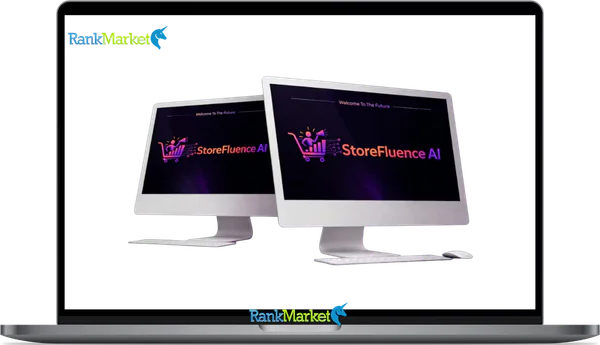
Buy StoreFluence AI+ OTOs full account + Bonus
$15.00
StoreFluence AI is an all-in-one AI platform that transforms product images into influencer-style video ads and ready-to-sell product pages without editing or coding skills.
| Deliver | StoreFluence AI + OTOs |
|---|---|
| Access | Shared |
| Type | AI eCommerce automation |
| Plan | FE + OTOs |
| Details | GB Details |
StoreFluence AI+ OTOs - Overview
StoreFluence AI is a platform that combines AI-generated influencer videos with a built-in e-commerce store builder, all inside one browser tab. If you've been searching this term, you're likely an ecommerce beginner, a dropshipper, an affiliate marketer, or a TikTok/Instagram seller trying to figure out whether this tool actually works. Maybe you're a freelancer or micro-agency owner sizing up new service offerings.
This guide cuts through the noise and answers the questions that actually matter in 2025, 2026:
- What exactly is StoreFluence AI and how does it operate?
- What features do you get, and what are the OTO/upsell tiers?
- Is it a legitimate tool or just another overhyped launch product?
- Who gets real results from it, and who will be disappointed?
You'll get a step-by-step workflow walkthrough, a feature breakdown, an honest pros/cons evaluation, and a straight-talking FAQ section. All information reflects StoreFluence AI's 2026 status. If you're a TikTok seller with no budget for human influencers or video editors, this guide was written with you in mind. Let's start with the clearest answer first: what StoreFluence AI actually is.
What Is StoreFluence AI?
StoreFluence AI is an all-in-one AI software platform that lets users create AI influencer videos and build simple e-commerce storefronts from a single dashboard, without writing code or hiring a video production team. The tool sits at the intersection of two distinct workflows: AI-generated promotional content and no-code store building.
Its two core pillars work as follows. First, the platform generates AI video influencers, digital avatars that deliver product pitches, talking-head reviews, or voiceover-style promos targeted at short-form platforms like TikTok, Instagram Reels, and YouTube Shorts. Second, it provides a drag-and-drop store builder so users can publish product pages, collect orders, and move buyers from a video ad to a checkout page, all within the same system.
In practice, a typical user uploads a product image, selects an AI avatar and script template, generates a short promo video, then attaches it to a one-product store page, all within roughly 15 to 30 minutes. The platform is marketed as a commercial tool, meaning users can legally sell the videos and storefronts they create to clients under the commercial or agency license tier.
- AI-generated video influencer / digital avatar creation
- Script and voiceover automation for short-form ad formats
- No-code e-commerce store builder for product pages and funnels
- Multi-platform content targeting TikTok, Instagram, YouTube Shorts
Now that the definition is clear, let's look at the specific problem this tool was built to address.
What Problem Does StoreFluence AI Solve?

The core pain point StoreFluence AI targets is this: most small sellers and solo marketers can't afford the full stack required to compete in social commerce. Human influencers charge anywhere from $200 to $5,000+ per post. Video editors bill $50–$300 per video. And setting up a Shopify store with proper pages, plugins, and integrations takes technical knowledge most beginners simply don't have.
StoreFluence AI claims to compress those three cost centers into one tool. You don't need a real actor, an editor, or a separate store platform. According to the platform's positioning, users can produce a store and video package within the same workflow, reducing production time from days to under an hour.
Consider a small fashion brand testing a new SKU, or a gadget dropshipper trying to run a TikTok ad for a trending product without a $500 filming budget. Those are the exact scenarios where a tool like this becomes worth testing.
One honest caveat: StoreFluence AI doesn't solve product-market fit. If your product has no demand, no AI avatar will change that. The tool handles content production and basic storefront setup, the marketing fundamentals still fall on you.
To see whether those time and cost claims hold up, we need to walk through what actually happens inside the dashboard.
How StoreFluence AI Works (Step-by-Step Walkthrough)
The end-to-end workflow inside StoreFluence AI moves from raw product idea to a live video and storefront in six stages. Think of it as Canva + HeyGen + a stripped-down Shopify, all sitting in one browser tab, with no plugins or external app integrations required at the base level.
Here's how the pipeline runs from start to finish:
- Step 1, Create a project and upload product assets. You name your campaign and upload product images or brief copy. This becomes the source material the AI draws from for script generation and visual framing.
- Step 2, Generate your AI influencer or avatar. The platform offers a library of pre-built AI avatars across age ranges and presentation styles, casual, corporate, lifestyle-oriented. You select one that fits your niche (e.g., a tech-reviewer style avatar for gadget promos, a beauty presenter for skincare content).
- Step 3, Generate the AI script and voiceover. The platform produces a short-form script using your product details, then renders an AI voiceover synchronized to the avatar's lip movement. You can edit the script before finalizing.
- Step 4, Turn the script and image into a short-form video. The image-to-video engine assembles the avatar, voiceover, product visuals, and any selected B-roll elements into a ready-to-export video clip, typically formatted for vertical platforms like TikTok (9:16).
- Step 5, Build or connect the e-commerce storefront. Using the drag-and-drop store builder, you set up a product page with sections for hero copy, benefits, social proof, and a checkout or order form. No external page builder or coding is needed.
- Step 6, Schedule or post content, then track performance. Built-in scheduling and analytics tools let you push content to connected platforms and monitor click-through and conversion data.
StoreFluence AI Features: Detailed Breakdown & Benefits
Key Features at a Glance
The table below maps StoreFluence AI's primary feature set to their practical function, the direct benefit they deliver, and the type of user most likely to use them.
|
Feature |
What It Does |
Main Benefit |
Ideal User |
|
AI Influencer Generator |
Creates talking-head digital avatars that deliver product pitches with lip-sync voiceover |
Removes the need for human actors or influencer contracts, saving $300–$1,000+ per promo video versus hiring freelance ad creatives |
Dropshippers, TikTok sellers, affiliates |
|
Script & Voiceover AI |
Generates product scripts and syncs AI voice to avatar delivery |
Cuts scriptwriting time from hours to minutes; no voiceover talent required |
Beginners with no copywriting background |
|
Image-to-Video Creator |
Converts static product images into short-form promotional video clips |
Produces video ads from product photos without a camera, lighting setup, or editor |
Solo sellers, print-on-demand operators |
|
Drag-and-Drop Store Builder |
No-code page builder for product landing pages, one-product stores, and basic funnels |
Replaces the need for Shopify or WooCommerce for simple setups; no developer required |
New e-commerce operators, local business marketers |
|
Templates Library (Video + Store) |
Pre-built video ad frameworks and store page layouts by niche |
Reduces decision paralysis; provides proven ad angles and page structures |
Non-technical users, beginners |
|
Posting & Scheduling Tools |
Schedules content across connected social platforms |
Removes the manual process of daily posting across TikTok, Instagram, and YouTube |
Content automation users, agency operators |
|
Analytics & Conversion Tracking |
Monitors video performance and store conversion data |
Identifies which creatives drive revenue versus which need adjustment |
Sellers running multiple ad creatives simultaneously |
|
Commercial / Agency License |
Allows users to sell videos and storefronts created with the platform to paying clients |
Opens a direct service revenue stream without building separate tools |
Freelancers, micro-agencies, solopreneurs |
The following subsections expand on the features readers ask about most: the AI influencer system, the template library, the store builder, and the commercial licensing structure.
AI Influencer Generator: How Realistic Are the Avatars?
StoreFluence AI's “influencer” output is a talking-head style avatar, a digital face with lip-synced voiceover, rather than a full-body AI character. Realism varies by use case. For beauty skincare or gadget review content, the output is generally “good enough” for TikTok-style ads where authenticity expectations are lower. For high-trust niches like finance or medical products, the synthetic quality becomes a visible limitation.
Key strengths: no scheduling conflicts, no talent fees, unlimited revision cycles. You can swap the avatar style, from casual lifestyle presenter to corporate spokesperson, without re-shooting. The primary risk is template overuse: if many users pick the same avatar and script framework unchanged, the output starts to feel familiar across campaigns.
Templates & DFY Assets Library
The template library covers three content categories relevant to most users. Video ad templates follow proven structural angles, Problem–Agitate–Solve (PAS), Before/After Transformation, and Social Proof Roundup are among the most conversion-tested formats included. Store templates range from single-product layouts to multi-product grids and funnel-style pages with upsell sections.
The value here isn't creativity, it's speed and decision removal. A beginner who doesn't know how to open a TikTok ad can start with a PAS template and simply swap the product details. Templates are cloneable and editable, so you can build a custom variation once and reuse it across multiple SKUs without starting from scratch.
Store Builder & E-Commerce Features in Depth
The StoreFluence AI store builder performs well within a specific range: 1 to 20 products, simple checkout flows, and funnel-style layouts. A typical buildout includes a hero section, benefits block, testimonials, FAQ, and a basic upsell or order bump. Mobile and desktop views are both manageable from the same editor.
Where it falls short is at scale. Complex inventory rules, multi-variant products with conditional logic, and advanced shipping configurations exceed what the builder handles natively. Consider a concrete example: a one-product beauty serum store with an embedded AI video explainer and a social proof section, that setup works well here. A 500-SKU catalog with custom fulfillment logic does not.
Order management covers the basics: order confirmation emails, basic coupon functionality, and email capture. Average order value (AOV) improvements through upsell sections are supported, though the depth of customization is limited compared to dedicated platforms.
Beyond your own store, there's a practical question worth asking: can you build client stores with this tool?
Commercial & Agency Use Features
Under the commercial license tier, users can sell both the videos and the storefronts they produce through StoreFluence AI to outside clients. This is what separates a personal-use SaaS subscription from a service delivery tool. The agency-level license typically adds multi-project management, the ability to handle separate client accounts from one dashboard.
Practical service packages that fit this model include: a “10 AI promo videos + 1-page product store” bundle priced at $400–$600, TikTok ad creative retainers for local businesses, and video + funnel packages for new dropshippers entering a niche. Before selling client work, set clear deliverable boundaries in writing, the platform's output volume and customization limits are real constraints that affect client expectations.
Pricing Plans and OTOs detailed
Front-End – StoreFluence AI ($14.95 one-time)
- All-in-one AI eCommerce and influencer creation platform
- Generate AI influencers, image-to-video content, and built-in stores
- Includes prompt generator and core tools for content + selling
- No monthly fees, pay once for lifetime access
- Beginner-friendly system for content creators and sellers
- Includes a 30-day money-back guarantee for risk-free testing
OTO 1 – Unlimited Edition ($65 – $67 one-time)
- Removes all usage limits across stores, products, and campaigns
- Create unlimited AI influencer videos and marketing assets
- Run more projects and scale without restrictions
- Ideal for users handling multiple products or client work
OTO 2 – Pro Edition ($47 one-time)
- Unlocks advanced eCommerce and marketing features
- Includes voice-based AI influencers and automated store setup
- Adds traffic tools, custom domains, and premium store designs
- Improves branding, conversions, and overall store quality
OTO 3 – Done-For-You (DFY) Edition ($67 one-time)
- Fully set up account with products, influencers, and automation
- Includes ready-to-use store structure and content
- Reduces setup time and technical work
- Best for beginners or users who want faster launch
OTO 4 – AI Workers ($37 one-time)
- Adds 20 AI agents for multi-purpose content creation
- Create websites, funnels, emails, videos, graphics, and more
- Supports SEO, chatbots, social media, and marketing assets
- Ideal for expanding services and boosting productivity
OTO 5 – AI Ranker ($297 one-time)
- Focused on SEO, backlinks, and search visibility
- Helps rank stores, websites, and product pages higher
- Drives organic traffic from search engines
- Suitable for users targeting long-term traffic growth
OTO 6 – Agency Edition ($47 one-time)
- Create and manage unlimited client accounts
- Sell StoreFluence AI as a service and keep the profits
- Includes admin dashboard and payment integration
- Ideal for freelancers and agency owners
OTO 7 – Whitelabel Edition ($47 one-time)
- Rebrand the platform with your own name and domain
- Launch your own AI software business
- Includes hosting, setup, and branding support
- Keep 100% of profits while selling under your brand
Pros, Cons & Real-World Results
Major Advantages of StoreFluence AI
The strongest case for StoreFluence AI is built on three overlapping benefits: speed, cost reduction, and accessibility for non-technical operators.
On speed: a user testing five different TikTok ad creatives can generate all five within a single weekend, something that would take two to three weeks when coordinating with human influencers or video freelancers. That creative testing velocity matters for dropshippers and affiliate marketers who need to identify winning angles fast before scaling ad spend.
On cost: removing the need for separate video production, a page builder subscription, and influencer fees collapses multiple monthly costs into one platform. For a solo operator spending $200–$500/month across those tools separately, the consolidation makes financial sense, provided the use case stays within StoreFluence AI's operational range.
On accessibility: the template-driven workflow means users who have never written an ad script or built a product page can produce a functional output. The DFY assets carry most of the creative decision-making, which reduces the skill barrier materially.
Additional advantages worth noting:
- All-in-one dashboard reduces the number of tools you need to context-switch between
- Winning video templates can be cloned across different products without rebuilding from scratch
- Commercial and agency licenses make it a billable service tool, not just a personal workflow tool
- Short-form video output is already formatted for TikTok, Instagram Reels, and YouTube Shorts, no manual reformatting needed
The advantage profile is strongest for simple-product, social-first commerce. If your operation is more complex, the limitations become more visible.
Drawbacks, Limitations & When It Disappoints
StoreFluence AI's limitations are real, and they tend to surface when user expectations exceed what the platform was built to do.
The AI avatars, while functional for short-form ad content, carry a synthetic quality that trained viewers can identify. In niches where personal trust drives purchase decisions, health supplements, financial services, high-ticket B2B, that lack of human authenticity becomes a conversion problem rather than just an aesthetic one.
The store builder, as covered above, works for lean catalogs and simple funnels. You'll run into its ceiling the moment you need custom checkout logic, advanced shipping rules, or a product catalog beyond roughly 20 SKUs.
Video output quality sits below what dedicated tools like HeyGen or Synthesia produce at their premium tiers. If you're comparing raw visual quality directly, the gap is visible. StoreFluence AI's value is in the bundled workflow, not in outcompeting specialized video tools on output fidelity alone.
Other limitations to factor in:
- The learning curve for AI prompt customization and template editing is not zero, budget a few hours for onboarding
- Template overuse risk is real: if you don't customize the provided frameworks, your output may look identical to other users in the same niche
- Higher usage limits and premium features typically sit behind OTO (upsell) tiers, which adds to total acquisition cost
You'll be disappointed if you expect a custom-coded enterprise storefront out of the box, or if you believe the tool removes the need for product research and marketing judgment. The platform handles production, the business fundamentals remain your responsibility.
Who Should (and Shouldn't) Use StoreFluence AI?
Ideal Users & Business Models
StoreFluence AI fits a specific operator profile, and understanding where you sit in that profile saves you the cost of a mismatched purchase.
The strongest-fit user is a non-technical seller with a small product range who needs to produce short-form promotional content without a production budget. A 23-year-old TikTok seller testing viral gadgets with a sub-$500 monthly budget and no video editing skills is the exact operator this tool was built for. The same applies to print-on-demand sellers running Instagram Shops, or affiliate marketers promoting digital products through YouTube Shorts.
New dropshippers operating 1 to 10 SKUs also fit well. The store builder handles their catalog range, and the video-to-store pipeline matches how TikTok Shop and Instagram Shop commerce actually works, video drives interest, a clean product page closes the transaction.
Freelancers and micro-agency owners looking to package “video + funnel” services for local businesses or new online sellers are another natural fit, particularly under the commercial license tier. If you're charging $300–$700 per client deliverable and producing that work inside StoreFluence AI, the math works.
Skill level: the platform is best suited to users comfortable with basic web tools, filling in forms, uploading files, adjusting text within templates. No coding, design background, or video production knowledge is required.
One practical consideration: if the platform's voice and avatar options are limited to English-language outputs, users targeting Vietnamese-speaking audiences or other non-English markets may need to verify language support before committing.
When StoreFluence AI Is Probably Not the Right Tool
The clearest cases where StoreFluence AI won't serve you well are also the most common source of buyer regret.
- If you already run an established brand with a Shopify store, a Klaviyo email stack, and an in-house creative team, StoreFluence AI adds redundancy rather than capability. The store builder won't replace your existing setup, and the video tools won't outperform what a dedicated creative team produces. The tool is redundant in that context, not an upgrade.
- Large catalogs with complex inventory logic, size/color variant matrices, and custom fulfillment workflows exceed what the store builder handles. Trying to force a 200-SKU apparel store into a platform built for single-product funnels creates operational friction that costs more time than it saves.
- Teams that already work with real influencers in high-trust niches, health, personal finance, serious B2B, will find that the AI avatar output reduces conversion rates rather than improving them. In those spaces, perceived authenticity directly affects purchase trust, and synthetic avatars don't carry that weight.
- If you're entering with the expectation of “set it up and collect passive income,” this tool will not meet that expectation. No software resolves the product selection, offer positioning, and audience targeting work that drives actual revenue.
Supplemental Content: Key Questions About StoreFluence AI
Is StoreFluence AI suitable for complete beginners?
Yes, for beginners with a clear product to sell. The template-driven workflow and DFY assets remove most of the technical and creative barriers. Expect a few hours of orientation time before the output quality reaches a usable level. Users with no prior experience in e-commerce or video marketing will still need to understand basic platform mechanics, the tool doesn't remove all judgment calls.
Is StoreFluence AI a one-time payment or subscription in 2026?
StoreFluence AI is marketed as a front-end one-time payment product, typically launched through JVZoo or WarriorPlus-style affiliate platforms. However, higher feature limits, commercial licenses, and agency capabilities often sit behind OTO (one-time offer) upsell tiers. Review the full funnel before purchasing, the base price rarely reflects the total cost of accessing all advertised features.
Does StoreFluence AI replace Shopify completely?
No. For very simple 1–5 product setups and straightforward funnels, it can serve as a functional alternative. For any operation requiring advanced checkout logic, multi-currency support, third-party fulfillment integrations, or scalable catalog management, Shopify or WooCommerce remains the appropriate platform. See the store builder section above for specifics.
Can you use StoreFluence AI videos for client projects?
Yes, under the commercial license tier. The base license may restrict commercial output, check the license terms before delivering client work. Agency tiers typically add multi-client project management capabilities.
Do you need prior video editing skills to use StoreFluence AI?
No prior video editing experience is required. The image-to-video pipeline, avatar selection, and script generation are all template-driven. Users who understand how to navigate web-based tools can produce output without any technical video background.
Is StoreFluence AI safe and legitimate to use with payment processors?
StoreFluence AI is a commercially distributed software product, not a fraudulent platform. The store builder connects to standard payment methods. Standard due diligence applies, read terms of service, confirm refund policy before purchase, and verify any payment processor compatibility requirements for your region before setting up live transactions.
What type of tool is StoreFluence AI, AI video generator, store builder, or both?
Both. StoreFluence AI functions as a bundled SaaS platform that combines an AI video generator, an AI avatar/influencer creator, and a no-code e-commerce store builder. The defining characteristic is the integration, the video and store workflows share a single dashboard rather than operating as separate disconnected products. This is what separates it from standalone tools like HeyGen or Synthesia, which handle video only, or Shopify, which handles store infrastructure only.
How does StoreFluence AI compare to standalone AI video tools like HeyGen or Synthesia?
HeyGen and Synthesia produce higher visual fidelity avatars with more extensive customization options, better lip sync, wider avatar variety, and deeper API integrations. StoreFluence AI trades some of that output quality for the bundled store and template system. If your primary need is premium AI video production without a store component, the specialized tools outperform StoreFluence AI on pure video quality. If you need both video and storefront in one system at a lower total cost, the bundled approach has practical advantages.
How does StoreFluence AI compare to Shopify or WooCommerce?
Shopify and WooCommerce are built for scale, large catalogs, complex checkout flows, third-party app ecosystems, and enterprise-grade analytics. StoreFluence AI's store builder is built for simplicity, 1 to 20 products, single-page funnels, and social commerce integration. The comparison is not really “which is better” but “which fits the stage of your operation.” A new seller testing a single product doesn't need Shopify's complexity. An established brand with 200 SKUs doesn't belong on StoreFluence AI's store builder.
Which business models benefit most from StoreFluence AI?
Dropshipping with a small product count, TikTok Shop selling, Instagram Shop operations, and affiliate marketing via short-form video are the strongest-fit models. Local business marketing (where a small business needs a video + landing page package) also works well. Wholesale, subscription-box commerce, and B2B sales models are poor fits, the platform's video and store design language is built for direct-to-consumer impulse purchasing, not considered B2B buying cycles.
Is StoreFluence AI better for organic content or paid ads?
It functions for both, with some caveats. Organic TikTok and Instagram content benefits from the speed of production, you can generate multiple content variations quickly and test which resonates. For paid advertising, the AI avatar output may not meet the quality threshold required by some ad platforms' content policies, particularly on Meta Ads where “synthetic media” disclosures are evolving. Test with organic traffic first, then use winning creatives as paid ad content once you've confirmed platform policy compliance.
At its core, StoreFluence AI is a production shortcut for social commerce operators who need video content and a product page without the full cost and time investment those elements normally require. Whether that shortcut fits your operation depends entirely on the complexity of your setup, and by now, you have enough information to make that call clearly.
Some Questions Before Join US
Group buying, also known as collective buying, offers products and services at significantly reduced prices on the condition that a minimum number of buyers would make the purchase.
- First, we will list product Here as people request & Collect Money From other peoples.
- Sec, Once enough moneys from customer, we will buy products From Developer.
- Then, we deliver to all Joiners.
- You can join directly by Purchase at our site and Reach Support about that to confirm.
- You can join via our Community : https://bit.ly/RMKDiscord
- How to Buy
We have 2 Product Status
- Instant-Deliver : Avaible and Deliver within 24-48hs (not on Sat-Sun, Holiday)
- Group Buy/Pre-Order : Not avaible, Still collect more people to join, need to wait.
OTO mean that One-Time-Offer/Upsell/Upgrade of Product For limited time only
Cancelled mean that order is not pay/process within 24hs. Please reach us with Order ID to check.
You will get Products by Download via Email .Once you finish payment to us and get confirm. You will get download Links inside your Account
- SAAS : You will get Individual account via Mail or On your Order List
- Shared Tool : via our chrome (WIN/MAC/Linux)
- WP : We will active key for your site.
- Course/Book/GraphicKit : Download link will send via mail or On your Order List.
- ETA Time : Fast maybe 3-4 days or 1 Week , Always be 3-4 Weeks or some times as Member Request it can be up to 3 Months to Group Buy WIN.
- GB Fail : You will get refund or exchange other.
– If Products problem, Capture screenshot/Video to us. We will forward to developer to fix it.
– If impossible sloved, we will exchange to other product. With Annual Product, we will refund or exchange by subtract times that you used.
– If used product for 1 or few years then not work. we will try to contact developer to fix it. But if some bad Vendors keep money and run, we just can give you some discount for future orders.
Warranty Time :
- Monthly Product : 30 days
- Annual/One Time Product : 1 year.
Our Store Credit mean credit can use to redeem on Your orders. 25 Credit = 1$.
Earn by some way :
- Place Orders. Each 1$ spend you will earn 1$
- Exchange some not work/not-fullfill orders by your agreed.
- By Reffer Your Friends to buy at our store.
How to redeem
- At Checkout page have redeem button to use it. Maxium is 250/orders.
- If you need redeem more. Reach our Support
We support only via 2 channel :
- Email : support@rankmarket.org
- Messenger : m.me/rankmarkenet (Live chat on Site)
TIme : From 9AM - 6PM Monday - Friday (GTM+8).
All Order/Ticket on Sat-Sun/Holiday will be supported on next Monday.
WE ARE TRY TO WORK HARD AND SUPPORT ALL PEOPLE BUT WE CAN NOT MAKE ALL HAPPY 100%
Thanks For You are here and belive US for longtime.
While working,we meet someone like & we will not support :
– People buy 1 but want to exchange to 10 Products.
– People who steal our products then ask refund.
– People fake payment to get our products.
– People always ask refund,can not wait for waiting product. Dont Pay. Wasted our Time.
Best Regards
David Green – RankMarket
Related products


SAAS Tools

SAAS Tools
SAAS Tools
SAAS Tools