
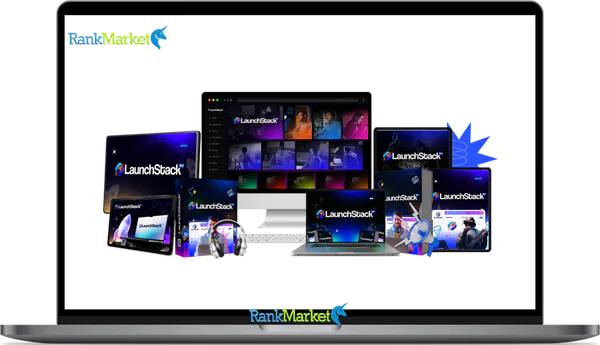
Buy LaunchStack AI + OTOs full account + Bonus
$17.00
LaunchStack AI is a white-label SaaS platform that lets you rebrand and sell a suite of AI tools as your own software business.
| Deliver | LaunchStack AI + OTOs |
|---|---|
| Access | Shared |
| Type | White-label SaaS platform |
| Plan | FE + OTOs |
| Details | GB Details |
LaunchStack AI is a white, label micro, SaaS platform that gives you 200+ pre, built AI tools to brand, package, and sell as your own software product, without writing a single line of code. Think of it as buying a fully stocked store and putting your own sign above the door.
This guide is built for non, technical founders, agency owners, freelancers, content creators, and affiliate marketers who want a real SaaS income stream without the $50,000 to $100,000 dev budget. It is based on hands, on technical review, not sales copy.
One concrete outcome you can realistically expect: launching a branded AI video generator or AI copywriting tool in under 15 minutes once your domain and logo are ready. This is not a passive income shortcut, it is a technical shortcut that still requires marketing effort on your end.
What Is LaunchStack AI?

LaunchStack AI is a white, label micro, SaaS platform that lets you rebrand and monetize a library of 200+ AI, powered tools as your own software business. You set your own domain, logo, pricing plans, and brand name, your customers never see LaunchStack branding anywhere.
“White, label” here means exactly what it sounds like: you take an existing, functioning product and apply your own identity to it. If you have ever bought a private, label product from a manufacturer and sold it under your store name, the logic is the same, except the product is a cloud, hosted AI SaaS platform.
LaunchStack AI is NOT a single, purpose chatbot builder, a WordPress plugin, a course platform, or a generic AI wrapper. It is a multi, tenant SaaS infrastructure designed to house many tools under one branded roof. The platform was built and positioned by creator Justin Opay in the white, label AI SaaS niche, targeting the gap between “subscribing to AI tools” and “owning an AI SaaS business.”
The value proposition is direct: instead of scattered subscriptions across ChatGPT, Jasper, Synthesia, and other specialized tools, your customers get a single branded portal. You build the business around that portal. That shift, from scattered AI subscriptions to a single monetizable SaaS product, is what LaunchStack AI is designed to make accessible.
Inside LaunchStack AI: Features & Architecture Overview
LaunchStack AI is built around one operational question: what does a solo founder actually need to run a functioning SaaS business, and can it be pre-built? The answer the platform gives is yes, across seven distinct components.
|
Component |
LaunchStack AI Coverage |
Traditional Build Cost |
|
AI Tools Library |
200+ pre, built tools for video, image, text, and SEO |
$10k to $50k+ (Dev time) |
|
White, Label Branding |
Custom domain, logo, colors, and brand copy |
$2k to $8k (Design/FE) |
|
User Management |
Login system, plan access, and account control |
$1k to $5k (Auth infra) |
|
Billing & Payments |
Native Stripe and PayPal integration |
$2k to $5k (Billing logic) |
|
Hosting & Infra |
Cloud hosting, SSL, and server management |
$100 to $500/mo (Hosting) |
|
Admin Dashboard |
User analytics and revenue reporting |
$3k to $10k (Admin UI) |
|
Integrations |
Zapier and webhook support for external CRMs |
$1k to $5k (API work) |
The practical implication is clear, instead of paying a developer $3,000 to $5,000 to wire up Stripe, user authentication, and a dashboard, you fill in a few configuration fields inside the admin panel and go live. Every interaction is form, or toggle, based, no terminal, no codebase, no staging environment required.
The “micro, SaaS” concept is worth understanding clearly. Rather than building one large SaaS application with hundreds of features, LaunchStack AI bundles many focused tools, each solving one specific task, under a single subscription roof. This structure is what makes the platform appealing to niche audiences: you can configure which tools appear in which pricing plan, so a “Starter” tier might include five writing tools while a “Pro” tier includes everything.
Pricing plans and OTOs detailed
Front-End: LaunchStack AI ($17 one-time)
- Access 200+ AI-powered tools for content creation, marketing, design, and automation.
- Built-in hosting and asset library for launching digital projects quickly.
- White-label rights to brand the platform and tools as your own.
- Commercial license to create and sell AI-generated content and services.
- Lifetime updates with no monthly fees or hidden costs.
OTO 1: LaunchStack AI Unlimited ($19–$29)
- Remove all usage limits to generate unlimited AI content and assets.
- Unlock unrestricted access to all LaunchStack AI tools and features.
- Create unlimited projects, campaigns, and digital products.
- Process larger workloads without daily or monthly caps.
- Scale AI workflows across multiple niches and businesses.
OTO 2: LaunchStack AI DFY ($19–$29)
- Done-for-you campaigns and templates ready to launch instantly.
- Prebuilt funnels, marketing pages, and content assets included.
- Ready-to-use AI prompts and optimized workflows.
- Faster setup for beginners with minimal technical work required.
- Launch digital products or campaigns in minutes.
OTO 3: LaunchStack AI Automation ($19–$29)
- Automate repetitive tasks like content creation and posting.
- Schedule AI campaigns and marketing workflows automatically.
- Run multiple AI processes simultaneously.
- Reduce manual work with built-in automation systems.
- Maintain consistent content output across platforms.
OTO 4: LaunchStack AI Profit Sites ($19–$29)
- Generate ready-to-launch monetized websites automatically.
- AI-powered niche site creation with built-in templates.
- Pre-optimized content for affiliate marketing and traffic.
- Integrated hosting and quick deployment tools.
- Designed for passive income and online monetization.
OTO 5: LaunchStack AI Agency ($19–$29)
- Create and manage AI services for multiple clients.
- Add and control multiple client accounts from one dashboard.
- Offer AI content, marketing, and automation services.
- Commercial rights to sell services using the platform.
- Scalable solution for freelancers and agencies.
OTO 6: LaunchStack AI Reseller ($19–$29)
- Sell LaunchStack AI as your own software product.
- Keep 100% of profits across the entire sales funnel.
- Access professional sales pages and marketing materials.
- No need to manage development or technical support.
- Build a SaaS-style business using the existing platform.
LaunchStack AI Setup Walkthrough: From Purchase to Live SaaS in a Day
The setup process is designed for speed. Most users with a domain and logo ready can complete the full configuration in three to six hours. Here is the ordered flow, as the platform structures it:
Step 1, Purchase and activate your LaunchStack AI account. After checkout, you receive login credentials for the admin dashboard. Activation is immediate, there is no manual approval queue.
Step 2, Connect your custom domain. Go to the domain settings panel and add your domain's DNS records (typically a CNAME or A record) pointing to LaunchStack's servers. Most domain registrars, GoDaddy, Namecheap, Cloudflare, process DNS propagation within 24 to 48 hours (~1–2 business days). SSL is provisioned automatically once DNS resolves.
Step 3, Upload your logo and set brand colors. The branding panel accepts standard image formats. You also update the platform name and tagline here. After this step, the front, end already looks like your product, not LaunchStack's.
Step 4, Configure your Stripe and/or PayPal API keys. Paste your payment gateway credentials into the billing settings. Run a $0 test plan to confirm transactions are routing correctly before going live with paid plans.
Step 5, Create your pricing plans. Set up at least two tiers, a Starter plan and a Pro plan is the typical structure. Define the price, billing cycle (monthly or annual), and trial period for each.
Step 6, Map tools to pricing tiers. Use the tool visibility toggles in the admin dashboard to assign which AI tools appear under which plan. This is where you define the product's value ladder.
Step 7, Customize your homepage copy and calls to action. Edit the headline, subheadline, feature descriptions, and CTA buttons directly in the front, end editor. Your homepage is the first thing prospects see, make the value clear in two sentences.
Step 8, Create a test user account. Sign up through your own branded portal as a regular user and walk through the entire experience: account creation, tool access, billing page, and email notifications. Fix anything that feels unclear before opening to the public.
Step 9, Configure email notifications. Set up the welcome email for new signups, password reset flow, and payment confirmation. LaunchStack AI provides default templates, edit them to match your brand voice.
LaunchStack AI includes built, in tutorial documentation and, depending on the plan, video walkthroughs inside the admin area. The learning curve for someone comfortable with online tools is measured in hours, not weeks.
LaunchStack AI Pros, Cons, and Real‑World Limitations
What LaunchStack AI Does Exceptionally Well
The platform's clearest advantage is time, to, launch. Where a custom SaaS build takes months and $20,000 to $100,000 in development spend, LaunchStack AI compresses the same functional output into a single day of configuration. That difference is the entire commercial case for the platform's existence.
Here is where the platform consistently delivers:
- Speed to market. A solo founder reported their first paying customer within 10 days of purchase, without a development team. The gap between idea and revenue, generating product is narrower here than with any custom, build path.
- Tool breadth across real use cases. The 200+ tools span writing, AI video generation, image creation, chatbot building, SEO analysis, code assistance, and voice synthesis. This variety means you can build a general, purpose AI portal or a tightly focused niche product, a “Legal AI Hub” or a “Real Estate Content Suite”, using the same infrastructure.
- True white, label depth. Domain, logo, brand colors, platform name, pricing copy, all of it is yours. Customers interact with your brand. This matters for client trust and long, term brand equity.
- All, in, one billing and hosting. You do not need a separate Stripe account manager, a hosting vendor, or a DevOps consultant. The total cost of ownership (TCO) for a LaunchStack, based SaaS is significantly lower than assembling the same stack from individual services.
- Non, technical accessibility. The entire admin experience runs through forms, toggles, and dropdowns. A founder with no coding background and basic web literacy can operate the full platform.
- The honest framing here is not that LaunchStack AI “guarantees passive income”, it removes the technology barrier that stops most non, technical people from owning a SaaS product. That barrier removal has real commercial value.
Where LaunchStack AI Falls Short (And Who Should Avoid It)
LaunchStack AI's constraints come directly from its architecture. Because the platform is pre, built and shared across all users, certain types of customization are structurally off, limits.
- Limited per, tool customization. Each AI tool inside the library works as designed. You can toggle visibility and assign it to a plan, but you cannot modify the tool's internal logic, UI layout, or output format. If a client asks for a specific custom workflow, say, a brand voice training module that feeds into the copywriter, you cannot build that inside LaunchStack AI. A realistic frustration scenario: a user wants to add a unique scoring system to the SEO tool, but the platform offers no mechanism for that modification. At that point, a custom build or a no, code tool like Bubble or Lovable becomes the right path.
- Template, constrained front, end design. The white, label layer gives you branding control, but not full design control. The layout structure, page architecture, and component behavior are fixed. If you want a distinctly different user experience, a proprietary UX that sets your product apart visually, LaunchStack's front, end will feel limiting.
- Vendor dependency and roadmap risk. Your product runs on LaunchStack's infrastructure. If the platform changes its pricing, deprecates tools, or faces operational issues, your SaaS is affected. This is the core trade, off of any platform, dependent model. Feature updates are controlled by Justin Opay's team, not by you.
- Competitive saturation risk. Because anyone can buy and brand a LaunchStack AI portal, differentiation cannot come from the technology itself, it must come from your marketing, niche positioning, audience trust, and customer support. Two portals built on the same platform can serve very different markets effectively, but only if each owner is actively building their brand.
- No traffic or distribution included. LaunchStack AI is infrastructure. It does not come with a user base, traffic source, SEO presence, or ad spend. Marketing is entirely your responsibility.
- Enterprise SaaS teams needing compliance controls (HIPAA, SOC 2), custom SLAs, or deep API integrations should look elsewhere. People unwilling to market their product or support customers should also avoid this path, the platform does not solve those requirements.
Who Is LaunchStack AI Best For?
LaunchStack AI fits a specific type of builder: someone who understands a niche audience, has some marketing ability, and wants to cut months of development time down to days. Five user profiles map particularly well to what the platform offers.
- Digital marketing agencies are the clearest fit. An agency owner can create a branded “AI Content Hub” and sell monthly seat access to clients who already trust them. Instead of managing five different tool subscriptions per client, the agency consolidates everything into one portal they control. Recurring revenue from existing clients is the outcome, not new revenue from cold outreach.
- Freelancers and consultants who want to productize their service delivery use LaunchStack AI to build a tool, based offering. A freelance copywriter, for instance, can spin up a branded AI writing platform and charge a monthly subscription, shifting from hourly billing to recurring income.
- Content creators and YouTubers in the AI, tech, or marketing space can build a branded “AI Tools Hub” as a backend product for their audience. The audience already trusts them, the platform gives them something concrete to sell.
- Affiliate marketers looking for a higher, ticket backend offer find LaunchStack AI useful for creating their own product rather than promoting someone else's. Owning the product means owning the margin and the customer relationship.
- Non, technical solo founders who want to test a SaaS idea without a developer can validate quickly. Most users report getting from purchase to a live branded site within one business day, the setup is form, based, not code, based. A realistic monthly recurring revenue (MRR) target for a focused micro, SaaS built this way sits between $500 and $5,000 for a single niche portal.
LaunchStack AI does NOT fit enterprise SaaS needs with strict compliance, deep custom logic, or complex API dependencies. It also does not suit anyone unwilling to handle their own marketing and customer support, the platform provides infrastructure, not distribution.
If you fit one of these profiles, the next step is understanding what you actually get inside LaunchStack AI.
LaunchStack AI vs. Alternatives: How It Compares
The clearest way to position LaunchStack AI is against two common alternatives: generic AI app builders and the “build from scratch” path. Each serves a different business reality.
|
Criteria |
LaunchStack AI |
Generic AI App Builders |
Business Impact |
|
Tool Variety |
200+ pre, built, multi, category tools |
Typically 1 tool or use, case per product |
LaunchStack gives a full product catalog from day one |
|
White, Label Depth |
Full, domain, logo, billing, and copy |
Partial or none, branding limited to logo |
LaunchStack lets you own the customer relationship completely |
|
Setup Speed |
Hours to days |
Days to weeks |
Faster time, to, revenue with LaunchStack |
|
Learning Curve |
Low, form, based admin dashboard |
Variable, depends on platform complexity |
Accessible to non, technical founders |
|
Pricing Model |
One, time entry (~$17 launch price) |
Often recurring SaaS fees per seat/usage |
Lower TCO for early, stage products |
|
Monetization |
Built, in, Stripe/PayPal, plans, accounts |
Often missing or requires 3rd party plugins |
Ready to charge and collect revenue from day one |
|
Customization |
Limited to platform scope |
Higher if the tool supports it |
Generic builders may win for single, use, case apps |
|
Best For |
Multi, tool SaaS portal |
Single, purpose AI tool with custom logic |
Choose LaunchStack for breadth and speed |
The key distinction: LaunchStack AI is oriented around a “ready, to, sell SaaS portal,” you are launching a product, not assembling one. Generic AI builders treat you as a developer configuring a tool. LaunchStack treats you as a business owner launching a product line.
Compared to hiring a developer to build from scratch, the difference is three to six months and $30,000 to $150,000 in development cost versus one day and a platform fee. The trade, off is flexibility, a custom build can do anything, LaunchStack can do what it was designed to do.
Supplemental FAQs About LaunchStack AI
Is LaunchStack AI Beginner, Friendly for Non, Coders?
Yes, LaunchStack AI requires no coding at all. The admin interface runs entirely on forms, toggles, and dropdowns. Someone who can configure a Shopify store or set up a Mailchimp campaign can handle the full LaunchStack setup. Most users go from purchase to a live branded site in under one day, once they have a domain and logo ready. Basic web literacy helps, but technical background is not a prerequisite.
Is LaunchStack AI a Scam or Legitimate Software?
LaunchStack AI is a real, functional software platform, not a pure information product or a promise. The platform ships with a working admin dashboard, live front, end, and payment integration that you can verify before committing. Creator Justin Opay has maintained a visible presence in the white, label SaaS space with public demos and active user community access. A refund policy exists, check the current terms at checkout. The honest expectation: the tool works, but owning it does not generate income automatically. That part still depends on you.
Does LaunchStack AI Provide Traffic or Marketing for Me?
No. LaunchStack AI is infrastructure, it handles the technology, not the distribution. You still need to build your own audience, run ads, create content, form partnerships, or do direct outreach to generate users. The platform gives you a product to sell, it does not give you buyers. Pair it with an existing audience, a content channel, or a paid acquisition strategy for the best results.
Can I Use LaunchStack AI for Multiple Brands or Clients?
This depends on your license tier. Standard access typically covers one branded portal. Agency or multi, license tiers, where available, allow separate portals under different brands. Some agency owners use one portal as a “hub” and configure niche, specific tool bundles for different client segments within that single installation. Confirm the current licensing terms at checkout, as tier structures can change with new product releases.
How Does LaunchStack AI Compare to Hiring a Developer?
The comparison comes down to three variables: time, cost, and flexibility. A developer, built SaaS takes three to six months and costs $30,000 to $150,000+ depending on scope. LaunchStack AI takes one to three days and runs on a platform fee. The trade, off is flexibility, a custom build can implement any feature you design, LaunchStack can only implement what the platform already supports. For non, technical founders validating a SaaS idea or building a first product, LaunchStack wins on speed and cost. For teams with specific technical requirements, a custom build may be the right path.
Can I Integrate LaunchStack AI with My Existing Tech Stack?
LaunchStack AI supports Zapier and webhook connections, which cover the majority of common integration needs. You can connect it to CRM tools like HubSpot or ActiveCampaign, email marketing platforms like Mailchimp or ConvertKit, and analytics tools like Google Analytics or Hotjar. Direct API access may depend on the plan tier. For complex integrations, multi, step automation, custom data pipelines, or proprietary tools, test the specific connection before committing to the platform as your core infrastructure.
What Happens If LaunchStack AI Shuts Down?
Platform dependency is a real risk with any SaaS, built, on, SaaS model. If LaunchStack AI were to shut down, your portal goes with it. The mitigation strategy is straightforward: build your email list off, platform from day one, keep customer relationships in a CRM you control, and do not make LaunchStack your only product or revenue source. Running a parallel offer or a content, based audience reduces this risk. Treat it as one distribution channel in a larger business, not the entire business itself.
Is LaunchStack AI Worth It in 2026 If I'm Starting From Zero?
For a complete beginner, LaunchStack AI removes the technology barrier, which is genuinely useful. The harder problem for beginners is not building the product, it is finding and converting an audience. If you are starting from zero with no existing audience, no marketing channel, and no niche authority, the platform alone will not generate revenue. A more grounded path: use LaunchStack as a backend for an existing freelance or agency practice, or start with a narrow niche where you already have domain knowledge. Build the audience first, then launch the portal to that audience.
LaunchStack AI is a practical entry point into the white, label AI SaaS space, not a guaranteed income machine, but a real infrastructure shortcut for non, technical founders who know their market. The platform handles the technology stack that would otherwise take months and tens of thousands of dollars to assemble. What it does not handle, and cannot, is the market positioning, audience development, and customer support that determine whether any SaaS product actually grows. If you enter with that understanding, LaunchStack AI gives you a structurally sound foundation to build from in 2026.
Some Questions Before Join US
Group buying, also known as collective buying, offers products and services at significantly reduced prices on the condition that a minimum number of buyers would make the purchase.
- First, we will list product Here as people request & Collect Money From other peoples.
- Sec, Once enough moneys from customer, we will buy products From Developer.
- Then, we deliver to all Joiners.
- You can join directly by Purchase at our site and Reach Support about that to confirm.
- You can join via our Community : https://bit.ly/RMKDiscord
- How to Buy
We have 2 Product Status
- Instant-Deliver : Avaible and Deliver within 24-48hs (not on Sat-Sun, Holiday)
- Group Buy/Pre-Order : Not avaible, Still collect more people to join, need to wait.
OTO mean that One-Time-Offer/Upsell/Upgrade of Product For limited time only
Cancelled mean that order is not pay/process within 24hs. Please reach us with Order ID to check.
You will get Products by Download via Email .Once you finish payment to us and get confirm. You will get download Links inside your Account
- SAAS : You will get Individual account via Mail or On your Order List
- Shared Tool : via our chrome (WIN/MAC/Linux)
- WP : We will active key for your site.
- Course/Book/GraphicKit : Download link will send via mail or On your Order List.
- ETA Time : Fast maybe 3-4 days or 1 Week , Always be 3-4 Weeks or some times as Member Request it can be up to 3 Months to Group Buy WIN.
- GB Fail : You will get refund or exchange other.
– If Products problem, Capture screenshot/Video to us. We will forward to developer to fix it.
– If impossible sloved, we will exchange to other product. With Annual Product, we will refund or exchange by subtract times that you used.
– If used product for 1 or few years then not work. we will try to contact developer to fix it. But if some bad Vendors keep money and run, we just can give you some discount for future orders.
Warranty Time :
- Monthly Product : 30 days
- Annual/One Time Product : 1 year.
Our Store Credit mean credit can use to redeem on Your orders. 25 Credit = 1$.
Earn by some way :
- Place Orders. Each 1$ spend you will earn 1$
- Exchange some not work/not-fullfill orders by your agreed.
- By Reffer Your Friends to buy at our store.
How to redeem
- At Checkout page have redeem button to use it. Maxium is 250/orders.
- If you need redeem more. Reach our Support
We support only via 2 channel :
- Email : [email protected]
- Messenger : m.me/rankmarkenet (Live chat on Site)
TIme : From 9AM - 6PM Monday - Friday (GTM+8).
All Order/Ticket on Sat-Sun/Holiday will be supported on next Monday.
WE ARE TRY TO WORK HARD AND SUPPORT ALL PEOPLE BUT WE CAN NOT MAKE ALL HAPPY 100%
Thanks For You are here and belive US for longtime.
While working,we meet someone like & we will not support :
– People buy 1 but want to exchange to 10 Products.
– People who steal our products then ask refund.
– People fake payment to get our products.
– People always ask refund,can not wait for waiting product. Dont Pay. Wasted our Time.
Best Regards
David Green – RankMarket
Related products

SAAS Tools
SAAS Tools