
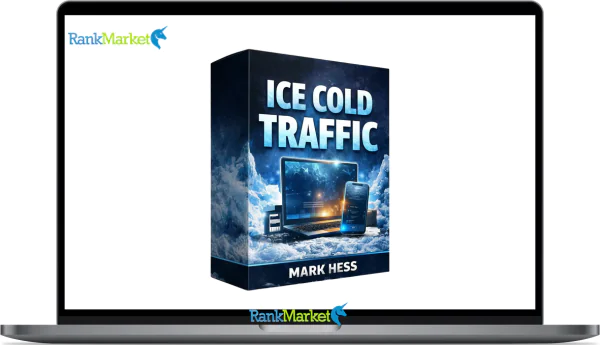
Ice Cold Traffic + OTOs
$9.00
Ice cold traffic refers to completely new visitors who have no prior awareness or interaction with a brand.
| Deliver | Ice Cold Traffic + OTOs |
|---|---|
| Access | Shared |
| Type | New audience traffic |
| Plan | FE + OTOs |
| Details | GB Details |
Most marketing teams pour their budget into retargeting lists, loyalty email sequences, and warm audiences. That makes sense, those people already know you. But here is the problem: that group is a fraction of your actual market. For the majority of businesses, somewhere between 70% and 90% of potential buyers have never encountered the brand, the product, or even the category. That is the world of ice cold traffic, and it is where the largest growth opportunity sits.
“Ice Cold Traffic” is two things at once. It is a core digital marketing concept, describing visitors who arrive with zero prior awareness and minimal purchase intent. It is also the name of the platform built by a team with over 10 years of experience in software, tools, and technology, designed specifically to help businesses handle this challenge at scale. When the right system is in place, brands have gone from struggling cold campaigns to generating 3x revenue from cold audiences in under six months.
In this guide, you will learn exactly what ice cold traffic is, how it differs from warm and hot traffic, and how to build a system, from first click to paying customer, using frameworks, metrics, and tools that are current for 2026. To get this right, you first need a precise definition of what “ice cold traffic” actually is.
What Is Ice Cold Traffic? (Core Definition & Traffic Temperature Spectrum)

Ice cold traffic refers to any visitor or lead who has zero prior relationship with a brand. No past visits. No ad exposure. No social media touchpoint. Absolutely no prior signal of intent beyond landing on a page for the first time. In contrast, “cold traffic”, a term often used loosely in marketing conversations, can sometimes describe audiences that have at least been exposed to a brand once. Ice cold traffic takes that a step further: these are true strangers.
|
Traffic Temperature |
Audience Mindset |
Primary Goal |
|
Ice Cold |
Anonymous, no brand awareness |
Problem education & trust building |
|
Cold |
Aware of brand but no engagement |
Lead capture & value demonstration |
|
Warm |
Email subscribers, repeat visitors |
Objection handling & nurturing |
|
Hot |
Past buyers, high-intent leads |
Upselling & loyalty |
Understanding the distinction matters for funnel design, not just vocabulary. Ice cold visitors behave differently from warmer segments. They skim quickly, trust nothing by default, and need meaningful context before they will engage with any offer. Think of someone clicking a YouTube pre-roll ad for a tool they have never heard of, or a user landing on your blog after searching a generic phrase like “how to improve website conversions.” Neither of these people is ready to buy. They are evaluating whether you are even worth their attention.
How to Convert Ice Cold Traffic Step-by-Step (From Click to Customer)
Step 1 – Capture Leads From Ice Cold Visitors (Without Killing Trust)
The first goal is moving an anonymous click into an identifiable lead. The instinct for many teams is to fire an aggressive pop,up the moment someone arrives, this is exactly the wrong move with ice cold audiences. Trust has not been established yet. Scroll-triggered or exit-intent forms perform better because they give the visitor time to consume some value before being asked to give anything in return.
The lead magnet you offer also matters. It should solve a small, specific problem quickly. For a software or technology audience, this could be a “Cold Traffic Tracking Template” or a “Free Automation Blueprint”, something immediately actionable with a clear benefit. Keep the form minimal: first name and email address is the ceiling for ice cold lead capture. Benchmark data suggests a well,aligned lead magnet on a content page can generate between 5% and 10% opt-in rates.
Step 2 – Warm-Up Sequences: Email & On-Site Nurturing
Ice cold leads rarely buy on first contact. That is not a failure, it is the nature of the relationship. They need to move through a trust,building process before a purchase decision makes sense. A structured email warm-up sequence is the most reliable mechanism for doing this at scale.
A five,to,seven email flow works well for most technology and software brands:
- Day 0: Deliver the lead magnet + one actionable tip.
- Day 2: Share a relatable story about the audience's problem.
- Day 4: Provide deeper education or a decision model.
- Day 6: Introduce social proof (case studies or testimonials).
- Day 8: The soft pitch, a trial, demo, or time,limited bonus.
Subject lines for this sequence should reflect the cold context. “Start here: 5 ways to stop wasting cold traffic” or “How we turned 100 strangers into 18 customers in 30 days” both signal relevance and curiosity without overpromising.
Step 3 – Retargeting & Multi-Channel Follow-Up
Retargeting is where the majority of ice cold visitors graduate to warm status. The mechanism is simple, a visitor lands, does not convert immediately, and then encounters the brand again through ads on another platform. The key is segmentation. Visitors who opted in should see different creative than those who bounced.
- Days 1–3: Remind the visitor of the lead magnet or guide.
- Days 4–10: Shift to testimonial videos or case study content.
- Day 11+: Use urgency,driven creative, like a limited,time trial or deadline.
Multi,channel follow,up amplifies this further. Email combined with retargeting ads, and optionally SMS or in,app messages, creates a compounding exposure effect that accelerates trust without being intrusive.
Step 4 – Advanced Plays: Personalization, Chatbots, and Product-Led Growth
Once the foundational system is running, advanced tactics can multiply the results. Website personalization, where headlines or CTAs change based on traffic source, removes the friction cold visitors feel. A visitor arriving from a Facebook ad about ad optimization should land on a page that speaks directly to ad performance, not a generic homepage.
Chatbots and in,page assistants serve a complementary function. For a cold visitor evaluating a solution, an assistant that asks “New here? Answer 3 questions and we'll show you the fastest path” is far more useful than a static page. It routes high,intent visitors to demos while letting lower,intent visitors self,educate.
Product-led growth is the third layer. Freemium access or guided trial flows can significantly reduce the barrier to first value. Each of these layers compounds. A 2–3% improvement at the capture stage, another 3–5% improvement in email engagement, and a further lift at the offer stage adds up to a meaningfully different revenue outcome.
Key Metrics, Analytics & Optimization Loops for Ice Cold Traffic
Core KPIs to Track for Ice Cold Traffic Campaigns
Measuring ice cold traffic performance requires separating metrics by funnel stage. Pooling all traffic data into one view obscures where the real leakage happens. Acquisition metrics, new users, CPM, CPC, CTR, and total impressions, tell you how effectively you are reaching new audiences. Engagement metrics, bounce rate, time on page, scroll depth, and pages per session, reveal whether the landing experience matches expectations. Conversion metrics, opt-in rate, trial or signup rate, purchase rate, CAC, and LTV, measure the bottom,line health of the funnel.
|
Metric |
Funnel Stage |
Why It Matters for Ice Cold Traffic |
Where to Track |
|
New Users |
Acquisition |
Measures reach into previously untouched audiences |
GA4 / Platform Analytics |
|
Bounce Rate |
On-Site Engagement |
Signals whether the landing page matches ad intent |
GA4 / Heatmap tools |
|
Email Opt-In Rate |
Lead Capture |
Shows lead magnet relevance and form performance |
ESP / Landing page tool |
|
Trial/Signup Rate |
Conversion |
Measures offer,to,product fit for cold leads |
Product analytics / CRM |
|
CAC (Cold) |
Revenue |
Identifies true cost to acquire a new customer |
Ad platforms / Attribution |
|
LTV Cohort (Cold) |
Long-Term Value |
Tracks if cold customers retain and upsell |
CRM / BI tools |
Cohort thinking is the practice that elevates this data from descriptive to actionable. Tracking a batch of ice cold visitors from a specific ad or keyword, and following their behavior over 30, 60, and 90 days, shows you the real conversion window. If a bounce rate on a cold ad landing page exceeds 50–60%, the page is likely misaligned. A realistic early benchmark for the full cold funnel is a 2–5% cold visitor to lead conversion rate.
Turning Data Into Improvements: Continuous Optimization Loops
Data without a decision,making process is just noise. The optimization loop for ice cold funnels follows a six,step rhythm: measure, diagnose, prioritize, test, implement, and repeat. The prioritization step is where most teams lose momentum, they try to fix everything at once. The more practical approach is to work from the top of the funnel down, finding the biggest leakage point first.
- Low Ad CTR: The problem is the hook, the first line, the image, or the headline needs testing.
- Healthy CTR / High Bounce: The disconnect is between the ad promise and the landing page experience.
- Engagement / No Opt-In: The lead magnet or the form itself needs attention.
- Leads / No Sales: The nurture sequence and offer clarity are the bottleneck.
Heatmaps and session recordings are useful companions to quantitative data. Watching how ice cold visitors actually navigate a page, where they stop scrolling, what they click, where they leave, surfaces fixes that analytics alone will not reveal. For example, swapping a generic ebook for a “5-Minute Audit Tool” doubled opt,in rates from 4% to 9% on a technology landing page.
Pricing Plans
FE – Ice Cold Traffic ($8.91)
- Generate 13 ready-to-use traffic assets on demand
- No need for paid ads, tools, or subscriptions
- Designed for beginners struggling with traffic generation
- Simple system for driving visitors quickly
- One-time payment with no ongoing costs
- 30-day money-back guarantee for risk-free testing
Common Mistakes Businesses Make With Ice Cold Traffic
Mistake 1 – Pushing for the Sale Too Early
The most frequent mistake is sending ice cold visitors directly to a pricing or sales page. The logic seems efficient, skip the middle steps, go straight to revenue. In practice, it accelerates ad fatigue, raises bounce rates, and wastes budget on audiences with no context.
Ice cold visitors need micro,commitments before they are ready for a macro,commitment like a purchase. Route cold traffic to content and lead magnets first. The first interaction should answer “can I trust this brand?” before it ever asks “can I have your money?”
Mistake 2 – Weak Landing Pages for Ice Cold Visitors
A landing page designed for warm audiences, one that assumes familiarity with the brand, will fail for ice cold visitors. Slow load times, unclear value propositions, and walls of text are all conversion killers.
A cold traffic landing page needs five components:
- A headline focused on a specific outcome.
- One primary CTA with no competing distractions.
- A direct statement of who the page is for.
- Specific social proof, a number, result, or recognizable name.
- Visual hierarchy communicating everything critical above the fold.
Page speed is not a minor detail, a page that loads in under 2.5 seconds (2,500 milliseconds) reduces bounce risk and signals professionalism.
Mistake 3 – No Follow-Up or Nurturing After the First Visit
Ice cold visitors almost never convert on their first session. Yet many businesses run paid campaigns with no retargeting pixel, no welcome email sequence, and no plan for what happens after the first click.
The fix is not complicated. Establish at minimum a three-email welcome sequence and a retargeting campaign that activates within 24 hours of the first visit. Tag cold leads in your CRM so their journey can be monitored. Adding just three nurture emails to a previously unfollowed cold list has recovered 5–10% more conversions for brands that had none.
Real-World Examples & Case Plays: Turning Ice Cold Traffic Into Revenue
Ecommerce Example: Scaling From Cold Facebook Ads to Repeat Buyers
Consider an ecommerce brand running broad Facebook and Instagram campaigns to audiences with no prior brand exposure. Initially, all cold traffic went directly to product pages. Conversion rates were low, ad spend was rising. The team shifted their approach: cold audiences now landed on a product-matching quiz, a short interactive experience that captured email addresses and segment data before making any purchase recommendation.
The email nurture sequence that followed offered educational content, style guides, and bundled product offers. Retargeting ads showed warm audiences product reviews and limited-time bundle pricing.
- Months 1–3: Ran small-scale experiments with quiz hooks.
- Months 4–6: Scaled the winning interactive paths.
- Result: Traffic volume grew by 300%, cold-to-lead rates improved, and ROI on cold ad spend stabilized because the nurture system handled the conversion work.
The central lesson: cold traffic does not convert at the point of first contact. Build a system for the journey between first click and first purchase, and the economics of cold acquisition change entirely.
SaaS/Tech Example: SEO Pillar Content + Free Tool + Trial
A technology company built a flagship pillar article targeting the search query cluster around cold traffic conversion. The article ranked organically and drew approximately 10,000 ice cold visitors per month, people arriving through Google searches like “how to convert cold traffic” or “cold audience funnel strategy.”
Embedded within the article was a CTA to a free audit tool: a self-assessment that helped visitors evaluate the health of their own funnel.
- Top of Funnel: Organic SEO pillar content.
- Lead Capture: 3% to 5% of readers completed the free audit tool.
- Nurture: Follow-up emails showed how to act on audit results.
- Conversion: Ended with a timed trial offer and onboarding checklist.
This compounding effect of semantic content, tool-based value, and structured nurture produced a steady pipeline of users at a fraction of the cost of paid traffic. This is precisely the model that Ice Cold Traffic's software stack is built to support.
Supplemental Q&A: Clarifying Common Questions
Is ice cold traffic always unprofitable at first contact?
Not always, but for the vast majority of products, a first-contact purchase is the exception. Profitability usually happens over a multi-touch window.
Can you send ice cold traffic directly to a sales page?
In specific contexts, like low-ticket impulse products, it can work. For software and higher-consideration purchases, it consistently underperforms a value-first funnel.
Does ice cold traffic always come from paid ads?
No. Organic search, social media discovery, podcast mentions, and referral links all generate ice cold traffic.
Is it possible to fully automate ice cold traffic funnels?
Largely, yes. Lead capture, email sequences, and retargeting triggers can all be automated. Human judgment is still needed for creative strategy and offer development.
Should I stop campaigns that only break even on the first purchase?
Not necessarily. If the LTV of cold-acquired customers is strong, a break-even first purchase can be a highly profitable long-term acquisition model.
What is a traffic temperature model?
The traffic temperature model classifies visitors by their level of brand familiarity and purchase intent, ranging from ice cold (zero awareness) through warm (engaged but undecided) to hot (ready to buy). Each temperature requires a different message, offer, and conversion strategy.
What is TOFU / MOFU / BOFU in marketing?
These acronyms describe funnel stages: Top of Funnel (TOFU) targets awareness,stage visitors, ice cold traffic lives here. Middle of Funnel (MOFU) addresses consideration,stage leads. Bottom of Funnel (BOFU) targets decision,ready prospects. Ice cold traffic enters at TOFU and should be nurtured through MOFU before receiving BOFU offers.
What is a cold traffic audience on Facebook or Google Ads?
On advertising platforms, a cold traffic audience is any targeting segment that does not include your existing customers, website visitors, or CRM contacts. This includes interest,based, demographic, behavioral, and lookalike audiences seeded from conversion data.
What is a cold traffic nurture sequence?
A cold traffic nurture sequence is an automated series of emails or touchpoints, typically five to seven communications, designed to build familiarity, credibility, and desire before presenting a commercial offer. It begins the moment a cold visitor opts in.
Ice cold traffic vs warm traffic: what's the main practical difference?
Warm traffic already recognizes the brand and has some level of established trust. Ice cold traffic has neither. Warm traffic converts on shorter sequences with more direct offers. Ice cold traffic requires more context, more proof, and a longer runway before an offer lands.
Cold vs retargeting audiences: which is more scalable?
Cold audiences are far more scalable because they represent a pool that can expand indefinitely, every new person on the internet is a potential cold visitor. Retargeting audiences are limited to people who have already interacted with the brand. Long,term growth depends on consistently feeding cold traffic into the top of the funnel.
Paid cold traffic vs organic cold traffic: which is better for long-term growth?
Organic cold traffic, driven by SEO, content marketing, and social discovery, builds a compounding asset over time. Paid cold traffic scales faster but stops when the budget stops. The strongest growth strategies combine both: organic content for sustainable volume and paid campaigns for controlled scale.
Free vs paid methods for attracting ice cold traffic: which should I start with?
If budget is constrained, start with organic methods, publishing content that targets informational search queries and building a presence in communities where your audience spends time. Once you have conversion data and a functioning nurture system, introduce paid traffic to accelerate volume.
Cold email vs cold ads: which is more efficient in 2026?
Cold ads reach audiences passively and scale without manual effort. Cold email (outbound) requires list building, deliverability management, and personalization at scale. For software and technology brands targeting defined professional segments, cold email can deliver higher intent leads. For broad consumer markets, cold ads are typically more efficient.
Cold traffic vs referral traffic: how does trust compare?
Referral traffic arrives with an implied endorsement from the referring source, a publisher, a friend, or a partner. That endorsement provides a small but real trust advantage over pure cold traffic. Both are still early,stage audiences, but referral visitors tend to engage more deeply on first visit.
Cold traffic vs brand search traffic: why do conversion rates differ so much?
Brand search traffic comes from people actively looking for a specific company by name, they already know the brand and have a reason to seek it out. Conversion rates are higher because intent and familiarity are both established. Cold traffic has neither, which is why the entire architecture of cold traffic funnels, from content to nurture to retargeting, exists to bridge that gap.
Some Questions Before Join US
Group buying, also known as collective buying, offers products and services at significantly reduced prices on the condition that a minimum number of buyers would make the purchase.
- First, we will list product Here as people request & Collect Money From other peoples.
- Sec, Once enough moneys from customer, we will buy products From Developer.
- Then, we deliver to all Joiners.
- You can join directly by Purchase at our site and Reach Support about that to confirm.
- You can join via our Community : https://bit.ly/RMKDiscord
- How to Buy
We have 2 Product Status
- Instant-Deliver : Avaible and Deliver within 24-48hs (not on Sat-Sun, Holiday)
- Group Buy/Pre-Order : Not avaible, Still collect more people to join, need to wait.
OTO mean that One-Time-Offer/Upsell/Upgrade of Product For limited time only
Cancelled mean that order is not pay/process within 24hs. Please reach us with Order ID to check.
You will get Products by Download via Email .Once you finish payment to us and get confirm. You will get download Links inside your Account
- SAAS : You will get Individual account via Mail or On your Order List
- Shared Tool : via our chrome (WIN/MAC/Linux)
- WP : We will active key for your site.
- Course/Book/GraphicKit : Download link will send via mail or On your Order List.
- ETA Time : Fast maybe 3-4 days or 1 Week , Always be 3-4 Weeks or some times as Member Request it can be up to 3 Months to Group Buy WIN.
- GB Fail : You will get refund or exchange other.
– If Products problem, Capture screenshot/Video to us. We will forward to developer to fix it.
– If impossible sloved, we will exchange to other product. With Annual Product, we will refund or exchange by subtract times that you used.
– If used product for 1 or few years then not work. we will try to contact developer to fix it. But if some bad Vendors keep money and run, we just can give you some discount for future orders.
Warranty Time :
- Monthly Product : 30 days
- Annual/One Time Product : 1 year.
Our Store Credit mean credit can use to redeem on Your orders. 25 Credit = 1$.
Earn by some way :
- Place Orders. Each 1$ spend you will earn 1$
- Exchange some not work/not-fullfill orders by your agreed.
- By Reffer Your Friends to buy at our store.
How to redeem
- At Checkout page have redeem button to use it. Maxium is 250/orders.
- If you need redeem more. Reach our Support
We support only via 2 channel :
- Email : [email protected]
- Messenger : m.me/rankmarkenet (Live chat on Site)
TIme : From 9AM - 6PM Monday - Friday (GTM+8).
All Order/Ticket on Sat-Sun/Holiday will be supported on next Monday.
WE ARE TRY TO WORK HARD AND SUPPORT ALL PEOPLE BUT WE CAN NOT MAKE ALL HAPPY 100%
Thanks For You are here and belive US for longtime.
While working,we meet someone like & we will not support :
– People buy 1 but want to exchange to 10 Products.
– People who steal our products then ask refund.
– People fake payment to get our products.
– People always ask refund,can not wait for waiting product. Dont Pay. Wasted our Time.
Best Regards
David Green – RankMarket
Related products
Courses
Courses
Courses