

Buy OmniVisual + OTOs full account + Bonus
$17.00
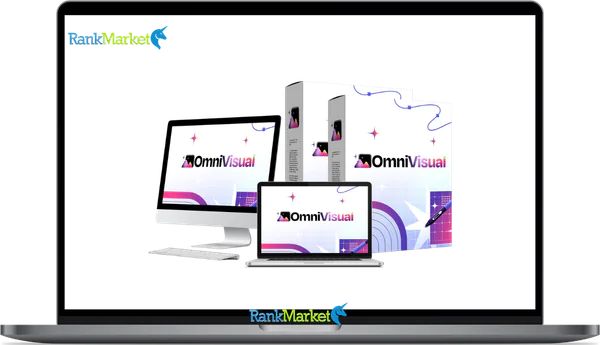
OmniVisual is an AI-powered platform that generates images from text prompts and enhances photos, graphics, and logos in a single web-based interface.
| Deliver | OmniVisual + OTOs |
|---|---|
| Access | Shared |
| Type | Image Generation Platform |
| Plan | FE + OTOs |
| Details | GB Details |
OmniVisual + OTOs - Overview
If you've landed here wondering what “OmniVisual” actually means, you're not alone. The term is circulating across creator communities, marketing forums, and eCommerce groups in 2026 — and for good reason.
OmniVisual is not a vocabulary word or a philosophical concept. It is a specific AI-powered platform that converts text prompts into high-resolution images and restores or enhances existing photos. Think of it as a two-in-one visual engine: one side generates imagery from language, the other side sharpens or revives the images you already have.
Whether you are a content creator, an online seller, or a marketing professional, this guide will give you enough clarity to decide whether OmniVisual belongs in your workflow. Prompts like “vintage car on a mountain road at dusk” or “product hero shot on a white background” are exactly the kind of inputs it is built for.
With over a decade of experience evaluating software, tools, and technology, OmniVisual brings both depth and precision to AI-driven image creation. First, let's clarify exactly what OmniVisual is and what it does.
What Is OmniVisual? (Clear Definition for Beginners)

At its core, OmniVisual is an AI-powered platform that generates images from text prompts and enhances or restores existing photos and graphics.
It is supported by three functioning pillars. The first is text-to-image creation, which produces a rendered visual output after you describe a scene in natural language. The second is picture restoration and upscaling, which creates clearer, higher-definition versions of low-resolution or deteriorated photographs. The third is graphic improvement, which improves the visual accuracy and edges of logos, graphics, and digital assets.
OmniVisual is a web-based SaaS program. Because you access it via a browser, there is no hardware requirement or installation expense. Teams who need to include AI picture creation or photo enhancement straight into their own platforms or pipelines might also choose to use an API.
It's important to clear up any confusion right away. The prefix “omni-” (as in omnivorous or omnipresent) is not the source of the term “omnivisual.” It is the correct term for a particular AI product that combines creation and improvement into a single creative interface.
The platform caters to a wide range of users, including independent producers, digital marketers, small business owners, eCommerce operators, and designers that require quick, production-ready images without having to handle a whole design stack. How it works is demonstrated by a straightforward mapping: you type “minimalist logo with a mountain icon, navy blue palette” and OmniVisual delivers a high-resolution picture file that can be downloaded and used.
The first step is to comprehend what OmniVisual accomplishes. Its key features are explained in further depth in the following section.
Key Features of OmniVisual at a Glance
From creation to final export, OmniVisual is built to manage a visual asset's entire lifespan. Before digging deeper into each function, here is a structured summary of what the platform offers
- Text-to-image generation: Generates images in a variety of styles, aspect ratios (square, portrait, landscape, and widescreen), and output resolutions up to 4K and higher using natural language prompts.
- Photo restoration and upscaling: Produces HD or 4K-quality outputs from hazy, pixelated, or low-resolution photos; excellent for older photos, compressed social media assets, or product photos taken with low-end devices.
- AI-driven edge refinement and clarity enhancement are applied to logos, icons, and digital graphics to provide clean, vector-like outputs without the need for manual retracing.
- Batch processing and prompt templates: Provides reusable prompt structures to preserve style consistency throughout a content set and enables users to queue several picture production or enhancement processes concurrently.
- Export format options: Provides customers with flexibility across web, print, and social media delivery channels by supporting PNG, JPG, and SVG-like outputs based on the mode chosen.
Beyond the core, OmniVisual has style presets that allow users to align their outputs with a certain style, such as product photography, digital illustration, editorial photography, and more. Iteration is possible without losing a desirable visual direction thanks to seed and regenerate controls. When available, versioning or output history allows you to review and contrast earlier outputs from a session.
In general, the free tier offers resolution and credit limits along with access to essential functions. Higher resolutions, commercial licenses, priority processing, and API features are all made possible by paid tiers. For readers seeking specifics, each of the three main capabilities—text-to-image, restoration, and enhancement—is broken down in the following sections.
How OmniVisual Works Step-by-Step (From Prompt to Download)
It is not necessary to have any prior design skills to use OmniVisual. From input to final file, the platform is organized around a straightforward, linear workflow. This is how the entire procedure operates.
- Step 1: Choose a mode and register. You select your working mode—text-to-image, photo enhancement, upscaling, or graphic/logo improvement—after registering. A customized interface with pertinent controls is displayed in each mode.
- Step 2: Type in your information. Type a detailed prompt for generating. Upload an existing image file (JPG, PNG, or other supported formats) for improvement or upscaling. Your output will be more predictable if your prompt is more precise.
- Step 3: Configure your settings. Adjust parameters including output style (photorealistic, illustrated, minimalist), resolution (HD, 4K, 8K where available), aspect ratio, and enhancement strength. For beginners, the default settings are a reliable starting point.
- Step 4: Execute the improvement or generation. Standard photos usually take between 10 and 30 seconds to process. Under typical server traffic, a 4K render from a detailed prompt (such as “cyberpunk street market, neon lighting, rain reflections, 4K”) often finishes in 15 seconds.
- Step 5: Examine and improve. Examine the preview panel's output. Regenerate using a different prompt language or change the style option if the outcome has to be adjusted. Iterations can be compared side by side thanks to output history.
- Step 6: Export and download. Choose your file format based on intended use: PNG for web and social (lossless transparency), JPG for compressed delivery, SVG-compatible output for logo and icon use cases where clean scaling is needed.
First-run tips to avoid frustration:
- Avoid vague prompts like “a nice photo.” Describe subject, lighting, setting, and mood.
- Start with default resolution settings before scaling up.
- Use style presets first, then override manually once you understand how each variable affects output.
Now that the workflow is clear, the next section will evaluate OmniVisual's real-world performance — quality, speed, ease of use, and the limitations worth knowing before you commit.
OmniVisual Pricing & Plans
Front-End (FE): OmniVisual – $16.95
- AI-powered text-to-image generator that creates HD to 4K visuals from simple prompts.
- Built-in photo upscaling and enhancement tools to improve image quality and resolution.
- Visual creation suite for logos, product mockups, marketing graphics, and brand assets.
- Beginner-friendly web interface that requires no installation or design experience.
- Commercial-ready visuals suitable for ads, social media, ecommerce listings, and campaigns.
OTO 1: Unlimited – $97 / $167 / $67
- Unlimited generation of 4K visuals, AI avatars, logos, mockups, and marketing graphics without daily or monthly caps.
- Access to advanced editing tools including inpainting, background removal, and style transfer.
- High-volume visual creation for ecommerce, content marketing, and client projects.
- Faster processing speeds for generating and enhancing images inside the platform.
- Commercial license allowing you to use and sell generated visuals for client or business use.
OTO 2: Done For You Setup – $197 / $297 / $97
- Complete account setup and configuration handled by the OmniVisual team.
- Pre-built niche selection and optimized campaign structure for faster launch.
- Integrated payment setup and marketplace configuration.
- Ready-to-use AI visual creation workflows optimized for monetization.
- Strategic targeting and system optimization to help users start faster.
OTO 3: Automation Pro – $47 / $27
- Automated visual content generation and asset updates without manual work.
- Smart marketing workflows that continue running inside the platform.
- Scheduled campaign execution and automated content deployment.
- Reduced repetitive tasks through integrated automation systems.
- Hands-free productivity designed for passive visual marketing workflows.
OTO 4: Swift Profits – $47 / $27
- Fast-track monetization strategies built specifically for OmniVisual users.
- Step-by-step methods for launching visual campaigns quickly.
- Techniques for turning AI visuals into sellable digital assets.
- Practical frameworks designed to shorten the path to first profits.
- Guidance focused on applying the platform for quicker business results.
OTO 5: Limitless Traffic – $97 / $167 / $67
- Traffic promotion system designed to send visitors to your links and offers.
- Exposure across major platforms including Facebook, YouTube, Instagram, TikTok, and Reddit.
- Increased visibility for your OmniVisual campaigns and marketing assets.
- Built-in promotional support for driving engagement and clicks.
- Expanded reach designed to generate more leads and conversions.
OTO 6: Agency License – $167 / $67
- Dedicated agency dashboard for managing multiple client accounts.
- Ability to sell AI visual creation services at your own pricing.
- Create custom service packages using OmniVisual features.
- Centralized client management for projects and user access.
- Keep 100% of the profits without revenue sharing.
OTO 7: Reseller / Franchise License – $97/ $167 / $67
- Right to resell OmniVisual software and keep the profits from each sale.
- Access to ready-made sales pages, marketing materials, and videos.
- Full backend system including hosting, support, and product delivery handled for you.
- Commission earnings across the entire sales funnel.
- Ability to run a software reseller business without building your own product.
OTO 8: 10X Edition – $47 / $27
- Access to over 200 additional tools designed for online income generation.
- Systems built to support multiple automated revenue streams.
- Ready-to-use resources for expanding beyond a single monetization method.
- Integration with OmniVisual workflows to support broader business growth.
- Opportunity to build diversified passive income strategies.
Who Is OmniVisual Best For? Use Cases by Role
Not every user benefits equally from any AI imaging technology. OmniVisual is a great fit for certain jobs and processes because of its unique blend of generation and enhancing capabilities. Knowing its strengths and weaknesses enables you to make decisions based on real needs.
- Content creators and YouTubers use OmniVisual to produce thumbnails, illustrative stills, and social media graphics without waiting on a designer. The prompt-based generation and style preset system means a creator can maintain visual consistency across a content series in minutes rather than hours.
- Bloggers and SEO-focused writers benefit from the ability to generate custom feature images and topic-relevant visuals on demand. Instead of relying on overused stock libraries, they can produce original imagery that aligns precisely with their article's subject matter.
- eCommerce sellers represent one of OmniVisual's strongest use cases. A seller with a library of low-resolution product photos — captured on a smartphone or sourced from a manufacturer — can run those images through OmniVisual's upscaling and background-cleaning functions to produce polished, platform-ready product visuals without a photoshoot.
- Marketers and agencies leverage the batch processing and style consistency features to produce ad creative variants at scale. A/B testing different visual treatments for a campaign becomes operationally straightforward when generation takes seconds per image.
- Designers working on client projects use OmniVisual for rapid concept visualization and for enhancing assets delivered by clients at insufficient resolution. It functions as an accelerant in the design process rather than a replacement for creative judgment.
OmniVisual Pros and Cons (Honest 2025 Review)
Each tool offers a variety of advantages and disadvantages. This is a fair appraisal of OmniVisual as it is in 2025, based on an analysis of its output quality, interface design, and place in the larger field of AI imaging.
Pros
- At the Pro tier, output quality for both generation and enhancement is consistently competitive, generating photos that perform well in print-at-size, web publication, and social media use cases.
- High-volume creative workflows are supported by the robust processing speed of regular picture projects, which often finish in less than 30 seconds.
- Beginner accessibility is a purposeful design priority. The interface offers sufficient parameter depth for intermediate-level customization while highlighting the most crucial controls without overwhelming a novice user.
- Value is significant in relation to specialized tools. Instead of buying a text-to-image tool and a dedicated upscaler individually, OmniVisual combines both features into a single subscription.
- One tool can fulfill several creative demands at once because to its versatility across image kinds, including portraits, product photos, landscapes, cityscapes, simple logos, and marketing graphics.
- The platform's performance in 2025 represents continuous improvement rather than a static set of capabilities since regular model updates enhance upscaling quality and generation accuracy over time.
Cons
- Users with daily high-volume needs may find credit-based usage on lesser tiers restricting, therefore it's important to evaluate credit consumption rates before making a commitment.
- Although most AI generation systems have this constraint, users with extremely detailed creative briefs should be aware that complex or abstract prompts might result in outputs that diverge from the intended concept.
- Because there isn't currently a native mobile application, the platform is browser-dependent, which restricts field-based creators' ability to use it while on the go.
- There is a learning curve for advanced prompt engineering. Compared to users who rely on surface-level inputs, those who take the effort to learn how to arrange descriptive language will get significantly more out of the tool.
An example trade-off: In most use situations, OmniVisual's upscaling capabilities reaches 4K to 8K resolution, meeting most web and print requirements. Although they are more expensive and lack generating capability, a dedicated specialized upscaler can go farther—into 16K territory. OmniVisual offers complete versatility throughout the visual development workflow in exchange for the largest upscaling ceiling.
OmniVisual has an overall rating of roughly 4.7 out of 5 across user ratings and platform evaluations, indicating high satisfaction among marketers and creators who use it as their main visual workflow tool. It is helpful to compare OmniVisual directly with other AI picture tools available on the market to see if it is the best choice for your particular stack.
OmniVisual vs Alternatives: How It Compares to Other AI Image Tools
In 2025, the field of AI imaging will be filled with tools that each relate to a distinct aspect of the visual creation process. You may decide whether OmniVisual addresses your particular issue or if a more specialized solution is necessary by knowing where it stands in relation to these alternatives.
|
Feature / Tool Type |
OmniVisual |
Art Generator (Midjourney-style) |
General AI (DALL·E-style) |
Dedicated Upscaler |
|
Text-to-image |
Yes (HD to 4K) |
Yes (art-focused, stylized) |
Yes |
No |
|
Photo upscaling |
Strong (4K / 8K) |
Limited / basic |
Basic |
Very strong (up to 16K) |
|
Photo restoration |
Yes |
No |
No |
Yes (advanced) |
|
Ease for beginners |
High (web UI, no install) |
Medium (community/Discord-based) |
High (integrated in apps) |
Low (advanced settings) |
|
Pricing model |
Free + subscription |
Subscription |
Pay-per-use or subscription |
Subscription |
|
Best for |
Mixed use + photo enhancement |
Artistic / creative visuals |
Quick general image generation |
High-end resolution scaling |
OmniVisual wins obviously on versatility and accessibility. It is the most useful consolidation available in 2026 for customers who require both generation and enhancement within a same process. The greatest resolution output is where a specialist upscaler excels; this is important for professional photographic post-processing or large-format printing. When it comes to raw artistic expressiveness for stylized creative work, Midjourney-style tools are superior.
The practical conclusion is that OmniVisual is the best all-in-one solution for customers who do not want to maintain numerous specialized subscriptions and is “good enough” for the great majority of content, marketing, and eCommerce visual needs. The most frequent queries that arise both before and after adoption will be covered in the next section if this comparison indicates that OmniVisual is a good fit.
Supplemental FAQs About OmniVisual (2025)
Is OmniVisual free to use?
Yes, OmniVisual has a free tier, but it has significant limitations that prevent it from being appropriate for the majority of business processes. All outputs are watermarked, and the credit allotted to free users is limited to about five image operations each day. The maximum resolution is lower than what is required for print or high-quality digital distribution. Watermark removal, business licensing, higher resolution outputs, and priority processing are all restricted to subscription plans. Before committing to a membership, it can be worthwhile to activate the free trial of premium features that are offered at signup to assess output quality.
Is OmniVisual safe and legal for commercial use?
The terms of service for OmniVisual's subscription plan subscribers often allow for the commercial usage of generated and improved outputs. If you are using the platform for marketing or eCommerce visual production, the use-case section of this guide provides additional context on how those workflows typically operate within platform guidelines. This means that marketing graphics, eCommerce product images, and ad creative produced through the platform can be used in revenue-generating contexts—subject to the specific language in OmniVisual's current ToS, which you should review directly before deployment.
Do I Need Design Skills to Use OmniVisual?
No, but having them enables you to get more out of the platform. Without any prior design knowledge, novices can use OmniVisual's preset library and default settings to create outputs that are ready for production. For instance, in less than an hour, a performance marketer without any experience with Photoshop can utilize OmniVisual to create several ad creative variations, such as different backgrounds, lighting styles, and color treatments. Meaningful design proficiency would be needed for the same task in a typical editor. In the meanwhile, the platform's sophisticated parameter controls and API access will be helpful to designers for more complex processes and pipeline integration.
Can OmniVisual Replace Photoshop or Other Full Editors?
No, and putting it in that manner raises irrational expectations. OmniVisual is not a complete pixel-level editing environment; rather, it is an AI generation and augmentation tool. A combined stack is the most efficient method for professional creative work: use OmniVisual for generation, upscaling, and first-pass enhancement, then import outputs into a conventional editor (Photoshop, Affinity Photo, or a similar program) for any necessary final refining. The speed of AI generation is captured by this hybrid approach without compromising the control precision needed for some deliverables.
Conclusion
From this point on, your practical next steps are simple. To compare the output quality to your real use case, start with the free tier and test two or three prompts, such as “minimalist product shot of a ceramic mug on a grey surface, soft natural light”. Collect a collection of low-resolution photos from your current collection and apply the upscaling feature to them. Next, contrast those results with what you are already generating using other process tools.
That contrast, founded in your own content and your own standards, will tell you more than any benchmark chart. With more than ten years of experience with software, tools, and technology, OmniVisual is still developing along with the larger field of AI imaging. As AI-generated visual content becomes the norm rather than a differentiator, the choices you make today about which tools to include in your creative stack will have a significant impact. The use of AI imaging technologies in professional workflows is no longer a question. Which one deserves a place at your table is the question.
Some Questions Before Join US
Group buying, also known as collective buying, offers products and services at significantly reduced prices on the condition that a minimum number of buyers would make the purchase.
- First, we will list product Here as people request & Collect Money From other peoples.
- Sec, Once enough moneys from customer, we will buy products From Developer.
- Then, we deliver to all Joiners.
- You can join directly by Purchase at our site and Reach Support about that to confirm.
- You can join via our Community : https://bit.ly/RMKDiscord
- How to Buy
We have 2 Product Status
- Instant-Deliver : Avaible and Deliver within 24-48hs (not on Sat-Sun, Holiday)
- Group Buy/Pre-Order : Not avaible, Still collect more people to join, need to wait.
OTO mean that One-Time-Offer/Upsell/Upgrade of Product For limited time only
Cancelled mean that order is not pay/process within 24hs. Please reach us with Order ID to check.
You will get Products by Download via Email .Once you finish payment to us and get confirm. You will get download Links inside your Account
- SAAS : You will get Individual account via Mail or On your Order List
- Shared Tool : via our chrome (WIN/MAC/Linux)
- WP : We will active key for your site.
- Course/Book/GraphicKit : Download link will send via mail or On your Order List.
- ETA Time : Fast maybe 3-4 days or 1 Week , Always be 3-4 Weeks or some times as Member Request it can be up to 3 Months to Group Buy WIN.
- GB Fail : You will get refund or exchange other.
– If Products problem, Capture screenshot/Video to us. We will forward to developer to fix it.
– If impossible sloved, we will exchange to other product. With Annual Product, we will refund or exchange by subtract times that you used.
– If used product for 1 or few years then not work. we will try to contact developer to fix it. But if some bad Vendors keep money and run, we just can give you some discount for future orders.
Warranty Time :
- Monthly Product : 30 days
- Annual/One Time Product : 1 year.
Our Store Credit mean credit can use to redeem on Your orders. 25 Credit = 1$.
Earn by some way :
- Place Orders. Each 1$ spend you will earn 1$
- Exchange some not work/not-fullfill orders by your agreed.
- By Reffer Your Friends to buy at our store.
How to redeem
- At Checkout page have redeem button to use it. Maxium is 250/orders.
- If you need redeem more. Reach our Support
We support only via 2 channel :
- Email : [email protected]
- Messenger : m.me/rankmarkenet (Live chat on Site)
TIme : From 9AM - 6PM Monday - Friday (GTM+8).
All Order/Ticket on Sat-Sun/Holiday will be supported on next Monday.
WE ARE TRY TO WORK HARD AND SUPPORT ALL PEOPLE BUT WE CAN NOT MAKE ALL HAPPY 100%
Thanks For You are here and belive US for longtime.
While working,we meet someone like & we will not support :
– People buy 1 but want to exchange to 10 Products.
– People who steal our products then ask refund.
– People fake payment to get our products.
– People always ask refund,can not wait for waiting product. Dont Pay. Wasted our Time.
Best Regards
David Green – RankMarket
Related products

SAAS Tools
SAAS Tools

SAAS Tools