


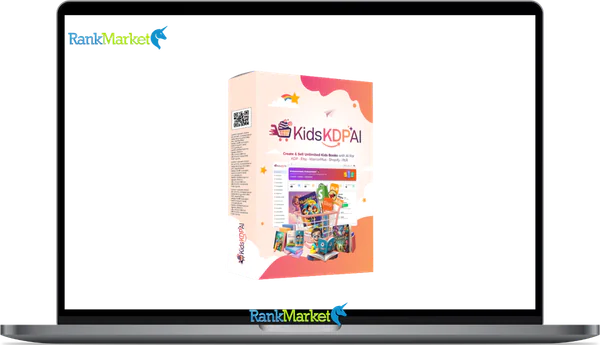
Buy Kids KDP AI + OTOs full account + Bonus
$25.00
Kids KDP AI refers to AI tools that create children’s books and publishing-ready content for Amazon KDP.
| Deliver | Kids KDP AI + OTOs |
|---|---|
| Access | Shared |
| Type | Kids Book Creation Tool |
| Plan | FE + OTOs |
| Details | GB Details |
“Kids KDP AI” refers to a category of AI-powered tools designed to create children's books for Amazon's Kindle Direct Publishing platform, covering picture books, short story collections, workbooks, and activity books. In some cases, the phrase also appears as a brand or product name tied to specific software bundles. Either way, the idea is the same: use artificial intelligence to generate stories, illustrations, layouts, and puzzles in a fraction of the traditional time, then publish both print and Kindle ebook formats directly on Amazon KDP.
The current reality in 2026 is straightforward. Amazon permits AI-assisted books, but the platform enforces two non-negotiable expectations: honesty and quality. Creators must follow KDP's content guidelines and be transparent about AI involvement when the platform requests it. Using AI is not a shortcut around responsibility, it's a change in workflow.
This guide serves four groups of readers: beginners and side-hustlers with no prior publishing background, parents and teachers building custom learning materials, freelancers and micro-publishers scaling their output, and small publishing operations testing multiple niches at once. By the end, you'll have a working definition of Kids KDP AI, a comparison of the main tools, a step-by-step publishing walkthrough, and a grounded view of compliance, risks, and realistic earnings.
Children's books remain one of the most active print categories on Amazon. That makes the opportunity real, but also the competition genuine.
What Is Kids KDP AI? Definitions, Components, and Use Cases

Core Definition: Kids KDP AI as a Tool Category
“Kids KDP AI” sits within the broader landscape of AI publishing tools, but it focuses exclusively on children's content for Amazon KDP, typically targeting the 0, 12 age range. Rather than a single application, it describes a workflow category that bundles together prompts, templates, and automation tailored to the specific demands of children's publishing: picture books, short story collections, coloring and activity books, and educational workbooks.
At the component level, these tools include:
- Story-text generators calibrated to child-appropriate vocabulary
- Illustration generators or curated image libraries with age-appropriate styles
- KDP-formatted layout and design modules built around standard trim sizes
- Export pipelines that produce print-ready PDFs or EPUB files
The key distinction worth understanding is the gap between generic AI tools, ChatGPT for text, Midjourney for images, and Kids KDP AI platforms that layer a children's publishing workflow directly on top of those underlying models. A generic tool gives you a blank canvas. A Kids KDP AI platform gives you a canvas pre-sized for a 24-page picture book, with an “ages 3, 5” language filter already applied.
Why Kids KDP AI Exists: Time, Cost, and Skill Gaps It Solves
Traditional children's book production is a resource-intensive process. Writing a quality story for young readers requires a specific skill set. Hiring a professional illustrator typically costs between $50 and $150 per illustration, and a 20-page picture book can have 20 spreads. Add layout, formatting, and revision cycles, and you're looking at timelines of four to twelve weeks and budgets starting around $2,000 to $5,000 before the book ever reaches Amazon.
Kids KDP AI tools compress that timeline and cost curve significantly. A working draft, text, rough illustrations, and basic layout, can take between 30 and 120 minutes. Monthly subscription costs for SaaS tools typically run $30 to $300, compared to project-based freelancer fees. Built-in prompts and templates mean that a creator without design or writing credentials can produce a structurally sound children's book on their first attempt.
|
Factor |
Traditional Kids Book |
With Kids KDP AI |
|
Time to first draft |
4, 12 weeks |
30, 120 minutes |
|
Upfront cost |
$2,000, $5,000+ |
$30, $300/month |
|
Skills required |
Writing + design + layout |
Basic editing and research |
Who Benefits Most from Kids KDP AI?
The appeal of Kids KDP AI is wide, but the strongest fit varies by persona.
- Complete beginners and side-hustlers represent the largest segment of the audience. These are people with no prior publishing experience who want a low-risk entry point into self-publishing. KDP has no upfront listing fee, and AI tools reduce the skill barrier.
- Parents, teachers, and homeschoolers use Kids KDP AI for a different reason: personalization. A teacher can generate a 30-page phonics workbook tailored to her classroom's current reading level over a single weekend. A parent can build a custom bedtime story featuring their child's name, interests, and a lesson they've been reinforcing at home.
- Freelancers and micro-publishers are perhaps the most sophisticated users. They leverage AI to accelerate client deliverables or to build out proprietary catalogs at a pace that manual production would never allow. For a micro-publisher, releasing a 10-book series rather than a single title multiplies the chances of at least one title gaining organic traction.
Core Kids KDP AI Tools and Platforms in 2026
Firelaunchers-Style “Kids KDP AI” Bundles: What They Offer
One recognizable pattern in the Kids KDP AI space is the bundled software product, the kind often sold through platforms like Firelaunchers, JVZoo, or WarriorPlus under product names that include “Kids KDP AI” directly. These products are typically structured as a one-time payment offer at launch, with optional upsells (called OTOs, or one-time offers) that add more templates, commercial licenses, or done-for-you (DFY) content packs.
The core feature set of a typical Kids KDP AI bundle includes:
- Pre-built AI prompt sequences designed specifically for children's stories
- AI image integration or a bundled library of kid-appropriate illustrations
- Done-for-you book interior templates in PowerPoint, Canva, or KDP formats
- Video training walkthroughs covering the entire workflow
The appeal is immediate entry. Everything a first-time creator needs is packaged together, and the workflow is prescribed rather than assembled from scratch. For someone who finds the DIY approach overwhelming, this kind of bundle removes decision fatigue.
|
Feature |
Typical Kids KDP AI Bundle |
|
Story templates |
Yes (Age-based sequences) |
|
Illustration options |
AI images or pre-licensed art |
|
Layout templates |
PPT, Canva, or KDP files |
|
Training |
Video walkthroughs included |
SaaS Kids KDP AI Platforms
Web-based SaaS tools represent the more scalable end of the Kids KDP AI ecosystem. Rather than a one-time purchase, these are subscription-based platforms, monthly or annual billing, that operate entirely in the browser with no software to install.
The typical SaaS platform for kids' KDP publishing includes a cloud dashboard where creators manage their book projects, text generators with adjustable parameters for age band, reading level, tone, and word count, illustration modules offering multiple visual styles (watercolor, cartoon), and one-click export to KDP-ready PDF and EPUB formats.
The structural advantages over bundles are meaningful. SaaS platforms update continuously, which means policy changes and new AI model improvements roll out without requiring the user to buy a new product. Commercial rights are typically addressed clearly in the platform's terms of service, reducing legal ambiguity.
Comparison Table: Bundled Offer vs. SaaS vs. DIY Stack
The three main approaches to Kids KDP AI each carry different tradeoffs. The table below maps those tradeoffs across the factors that matter most to a publisher.
|
Approach |
Setup Time |
Monthly Cost |
Flexibility |
Learning Curve |
Best For |
|
Bundled Product |
Very fast |
Near zero |
Low |
Low |
Beginners |
|
SaaS Platform |
Fast |
$30, $150 |
Medium |
Low to medium |
Scaling a catalog |
|
DIY Stack |
Slow |
$20, $80 |
High |
High |
Expert creators |
No single approach wins across all categories. Beginners tend to find the most traction with bundled offers or entry-level SaaS tools. Creators with some publishing experience often migrate toward SaaS platforms or a custom DIY stack as their process matures.
Pricing Plans and OTOs detailed
FE – KidsKDPAI ($24.95)
- Full access to all 5 AI book creators
- Cloud-based dashboard for easy management
- Create kids books, activity books, and puzzles
- Export options for publishing (KDP & digital)
- Commercial rights included for selling content
- One-time payment with lifetime access (no monthly fees)
OTO 1 – KidsKDPAI Pro ($37)
- Generate up to 20 eBooks per niche
- Bulk book creator for faster production
- Advanced AI story generation modes
- Premium puzzle and activity templates
- Built-in kids eBook cover creator
- Faster rendering engine with DFY content included
OTO 2 – KidsKDPAI Unlimited Agency ($67)
- Remove all usage limits completely
- Unlimited book creation and exports
- Full agency and commercial rights
- Create and sell books for clients
- Access client-ready templates
- Built for scaling and consistent income
OTO 3 – KidsKDPAI Reseller ($127)
- Resell the software and keep 100% profits
- Done-for-you SaaS business setup included
- Set your own pricing and offers
- No need to handle support or tech
- Launch your own software business instantly
- High-profit potential with minimal effort
Step-by-Step: How to Create a Kids' Book with AI and Publish on KDP
Step 1 – Choose a Profitable, Child-Safe Niche
Niche selection is the decision that shapes everything downstream. In children's publishing, a “niche” is the intersection of three variables: the target age group, the subject or theme, and the book format.
To identify a viable niche in 2026, use Amazon's A10 algorithm signals. Browse Children's Books and focus on subcategories like “Animals,” “Early Learning,” or “Activity Books.” Pay attention to the Best Seller Rank (BSR)—ideally under 100,000—and look for “aesthetic” trends currently popular on platforms like TikTok or Instagram, as external traffic is now a major ranking factor.
Example high-demand niches for 2026:
- Bilingual Bedtime Stories: English–Spanish or English–French for ages 3–5.
- “Bold and Easy” Coloring Books: Large-print designs for toddlers (ages 2–4) or seniors.
- Logic Puzzle Books: Focused on “computational thinking” for ages 7–10.
Step 2 – Set Up Your Kids KDP AI Workflow and KDP Account
If you don't yet have a KDP account, visit kdp.amazon.com to register. In 2026, Amazon has stricter monitoring for rapid book uploads, so focus on setting up a high-quality Author Central profile to build brand trust.
For your tooling, choose your approach (Bundle, SaaS, or DIY) and configure your environment. Select your primary language and save 3–5 prompt templates. If you use a pen name, ensure it is consistent across your book series to help the algorithm group your titles together.
Step 3 – Generate, Edit, and Age-Proof the Story Text
Effective AI prompting for children's stories requires specificity. A vague prompt produces generic, “AI-flavored” output that readers often flag.
Prompting Strategy:
- Weak: “Write a kids' story about a bunny.”
- Strong: “Write a 500-word rhyming story for ages 4–6 about a bunny who finds courage. Use simple vocabulary, a warm tone, and ensure a safe, happy ending.”
The 2026 Editing Pass: Amazon now scrutinizes content quality more heavily. You must remove “AI artifacts”—common phrases like “delve,” “tapestry,” or “in conclusion.” Read the story aloud to ensure the rhythm works for parents reading to their children.
Step 4 – Create Illustrations and Design the Layout
Illustrations are the soul of a children's book. In 2026, the key to success is character consistency. If your main character looks different on every page, your book will likely receive “low-quality” flags or poor reviews.
Technical Requirements:
- Resolution: Minimum 300 DPI for all images.
- Margins/Bleed: For images that go to the edge, add 0.125 inches to the outside edges in your layout software (e.g., Canva or InDesign).
- Font Size: For early readers, use 18pt or larger.
Step 5 – Create the Cover and KDP-Ready Files
The cover must appeal to both the child and the parent. Ensure the title is fully legible even at a small thumbnail size in search results.
The 2026 Disclosure Rule: When uploading your files to KDP, you must now navigate the AI-Generated Content field. You are required to disclose if AI generated the final text, cover, or interior images.
- Select “AI-Generated”: If the AI produced the core manuscript or final artwork.
- Select “AI-Assisted”: If you used AI only for brainstorming, outlining, or grammar checks (disclosure is typically not required for assistance).
Final Checklist:
- Interior: Exported as a press-ready PDF.
- Cover: Dimensions calculated using the KDP Cover Calculator based on your final page count.
- Metadata: Ensure your categories and keywords are accurate to avoid “misleading metadata” penalties.
Step 6 – Upload, Set Metadata, and Launch on Amazon KDP
Publishing on Amazon KDP follows a structured process. In 2026, metadata accuracy is the primary lever for avoiding account suppression.
- Book Details: Enter your title and a benefit-driven subtitle (e.g., “A Rhyming Story About Bravery”).
- Book Description: Write for parents. Use bullet points to highlight what the child will learn. Avoid “keyword stuffing,” as the 2026 algorithm now flags repetitive metadata.
- Keywords and Categories: Choose the age range that strictly matches your content. Accurate categorization (e.g., Juvenile Fiction > Animals > Rabbits) is essential for ranking.
- AI Disclosure (Mandatory): On the Content tab, you must answer the AI-Generated Content question. If AI created the text or images, select “Yes.” Failure to disclose can lead to permanent account termination.
- Pricing and Royalties: For ebooks, the 70% royalty is usually best for prices between $2.99 and $9.99. For print, a 60% royalty applies to books at $9.99+, while those below earn 50%.
Step 7 – Monitor Sales, Optimize Titles, and Scale
The 2026 marketplace rewards catalog depth. Review your KDP reports weekly to see which titles are gaining traction.
- Optimize: If a book has high “impressions” but low “clicks,” your cover or title needs work. If it has clicks but no sales, your description or price is likely the issue.
- Scale via Series: Building a series around a consistent character compounds your marketing. A parent who buys Book 1 is 40% more likely to buy Book 2 if the branding is consistent.
- Multilingual Expansion: Use AI to translate successful titles. Bilingual books (e.g., English-Vietnamese) are a high-growth niche in 2026.
How Much Can You Earn with Kids KDP AI?
Revenue Drivers and 2026 Payouts
Earnings come from three streams: direct sales, Kindle Unlimited (KU) page reads, and expanded distribution.
- KU Payouts: As of January 2026, the KENP (Kindle Edition Normalized Page) rate is approximately $0.0042 per page. A 30-page picture book fully read earns you about $0.12 per borrow.
- Print Margins: A $12.99 paperback typically nets $4.00–$5.50 after printing costs.
- Ebook Margins: A $4.99 ebook at 70% royalty nets approximately $3.40 after delivery fees.
Realistic Scenarios: Conservative vs. Aggressive
The table below provides illustrative income ranges for different strategies in the 2026 landscape.
|
Strategy Level |
Books/Year |
Avg. Monthly Revenue |
Time Invested/Week |
|
Conservative |
5, 10 |
$50, $250 |
2, 4 hours |
|
Moderate |
15, 30 |
$500, $2,500 |
5, 10 hours |
|
Aggressive |
50+ |
$3,000, $10,000+ |
20+ hours |
Note: The “Aggressive” tier requires a “brand-first” approach, focusing on niche dominance and external traffic (ads or social media).
Pros and Cons of Using Kids KDP AI for Children's Books
Advantages: Where Kids KDP AI Shines
The strongest case for Kids KDP AI is not that it makes publishing effortless, it's that it removes the barriers that previously made children's self-publishing inaccessible to most people.
- Low barrier to entry. No advanced writing, illustration, or layout skills are required. The tools handle the technical execution; the creator focuses on niche selection and quality review.
- Fast prototyping and iteration. An idea for a niche can be tested with a real book in days rather than months. If the niche doesn't perform, the cost of the experiment is minimal.
- Cost efficiency. The gap between hiring a full creative team, writer, illustrator, designer, formatter, and using a $50/month SaaS tool is meaningful. For someone testing a publishing business, that gap determines whether they can afford to experiment.
- Niche exploration at volume. AI tools make it practical to test five niches simultaneously rather than committing months to a single concept. That diversification reduces the risk that a poor niche choice kills the entire project.
- Multi-language expansion. Producing bilingual editions or translations of successful titles is significantly more accessible with AI assistance, opening global markets without proportional increases in cost.
- Support for non-native English speakers. AI text generation and polishing capabilities allow creators working in their second or third language to produce natural-sounding English content that would otherwise require professional editing.
- Customization for educators and parents. Teachers and homeschoolers can produce classroom-specific workbooks, phonics materials, and story collections tailored to their students' exact needs, a use case that has no affordable alternative.
- Series creation and brand building. Consistent AI-generated characters and world-building across a series allows even solo creators to build a recognizable children's brand at a pace that manual production cannot match.
Limitations and Risks You Must Understand
The same efficiency that makes Kids KDP AI appealing also creates a set of risks that any serious publisher needs to account for.
- Quality variability is the primary operational challenge. Raw AI output, whether text or image, is often mediocre or inconsistent. A rhyme scheme breaks down on page 14. A character's appearance changes between spreads. Educational content contains a factual error. None of these problems are automatically caught by the AI. Every output requires human review, and that review takes time and judgment that cannot be fully automated.
- Age-appropriateness is a non-negotiable editorial responsibility. AI text generators do not inherently understand what is emotionally appropriate for a four-year-old versus an eight-year-old. Themes that are too dark, conflicts that are too intense, or language that is too advanced for the stated age group can result in negative reviews, returns, or KDP flags. The creator must function as the editorial filter.
- Market saturation is a growing concern. The same tools that make creation accessible to you are accessible to everyone. Certain categories, generic rhyming bedtime stories, simple ABC books, basic coloring books, are already crowded with AI-generated titles. Differentiation is increasingly the determining factor, not speed of production.
- Policy change risk is real. Amazon's KDP content guidelines, its stance on AI disclosure, and its review criteria are all subject to change. A strategy that is compliant today may require adjustment in twelve months. Monitoring official KDP policy updates is not optional for serious publishers.
- Potential bias and inaccuracy in educational content is a specific risk for workbooks, fact-based stories, and any content that makes instructional claims. AI models can generate plausible-sounding but incorrect information. Educational titles require fact-checking that goes beyond standard editing.
- Copyright and trademark exposure is a genuine legal risk. AI image generators trained on web-scraped data may reproduce elements of copyrighted artwork. Using famous characters, brand names, or trademarked properties in AI-generated stories, even transformatively, carries legal exposure that KDP's policies do not protect you from.
- Reader and parent skepticism is an emerging market reality. Some parents actively seek out titles they believe are human-authored, particularly for educational materials. AI-generated books that are formulaic or visually inconsistent can trigger negative reviews that disproportionately affect a catalog's long-term performance.
- Over-reliance on templates produces formulaic books. When dozens of publishers use the same prompt templates and art style presets, the resulting books look and read like each other. Differentiation requires creative input that goes beyond what any template can provide.
Supplemental Q&A: Definitions and Clarifications About Kids KDP AI
What counts as a “kids' book” on Amazon KDP?
Amazon classifies children's books as titles intended for readers from birth through age 12, including picture books, early readers, chapter books, activity books, and educational workbooks. The platform uses age range metadata to categorize and surface these titles appropriately.
What is the difference between AI-generated and AI-assisted content?
AI-generated content is produced almost entirely by an AI model with minimal human input, the prompt goes in, the output goes directly to publication. AI-assisted content uses AI as a drafting or prototyping tool, with a human making substantive editorial decisions throughout the process. Amazon's guidelines in 2026 permit both, but quality and honesty standards apply equally to each.
Can I publish AI-generated children's books on KDP in 2026?
Yes. Amazon KDP allows AI-assisted and AI-generated content as of 2026. However, the platform requires that all content meet its quality standards and content guidelines, the same standards that apply to any book. Low-quality, duplicative, or misleading AI-generated titles are subject to the same removal or suppression as any other non-compliant content.
Do I have to tell readers that I used AI?
Amazon currently requires publishers to disclose AI involvement during the upload process within KDP's content management system, the platform asks directly whether AI was used to generate text or images. What appears on the book's public listing page varies, but honesty within the platform is mandatory. Withholding that information when asked constitutes a policy violation.
Can Amazon ban my account for using Kids KDP AI tools?
Amazon can, and does, take action against accounts that violate KDP guidelines, which can include suspension or termination. Using AI ethically, disclosing its involvement, and maintaining content quality does not put your account at risk. Flooding the platform with low-quality, duplicative AI content, misrepresenting AI-generated books as human-authored, or violating content policies does.
Do I need my own ISBN for AI-created kids' books?
No. Amazon KDP provides a free ISBN for print books published through the platform. You can also purchase your own ISBN if you want publishing flexibility beyond Amazon, but for KDP-exclusive print publishing, the free KDP ISBN is sufficient.
Can I use famous characters or brand names in AI-generated stories?
No. Using characters, names, or properties protected by trademark or copyright, regardless of whether they were generated by AI or written by hand, creates real legal exposure. KDP may remove such titles, and rights holders can pursue legal action independently of Amazon's platform decisions.
Which types of kids' books are easiest to start with using AI?
Three formats consistently produce the most accessible starting point for new creators:
- Coloring and activity books, minimal text, straightforward line-art requirements, low editorial complexity
- Simple picture books (ages 3, 5), short word counts, clear narrative structure, well-defined AI prompt parameters
- Basic educational workbooks, structured page layouts, repeatable template logic, clear content requirements
What's the difference between generic AI tools and kids-specific KDP AI platforms?
Generic AI tools (ChatGPT, Midjourney, Canva AI) provide raw capability without publishing-specific structure. Kids KDP AI platforms add age-band parameters, KDP-format templates, export pipelines, and children's publishing workflows on top of the same underlying technology. The platform does more of the workflow scaffolding; the DIY stack gives you more control.
Is it better to invest in a one-time “Kids KDP AI” bundle or a monthly SaaS?
As the comparison table in Section 4.4 shows, bundled offers suit beginners who want a structured starting point with no ongoing fees. SaaS platforms suit creators who are actively publishing at volume and need continuous updates, more customization, and cloud-based project management. The DIY stack suits experienced creators who want maximum flexibility and are comfortable assembling their own workflow. Start with the approach that matches your current skill level, you can always migrate upward as your catalog grows.
Some Questions Before Join US
Group buying, also known as collective buying, offers products and services at significantly reduced prices on the condition that a minimum number of buyers would make the purchase.
- First, we will list product Here as people request & Collect Money From other peoples.
- Sec, Once enough moneys from customer, we will buy products From Developer.
- Then, we deliver to all Joiners.
- You can join directly by Purchase at our site and Reach Support about that to confirm.
- You can join via our Community : https://bit.ly/RMKDiscord
- How to Buy
We have 2 Product Status
- Instant-Deliver : Avaible and Deliver within 24-48hs (not on Sat-Sun, Holiday)
- Group Buy/Pre-Order : Not avaible, Still collect more people to join, need to wait.
OTO mean that One-Time-Offer/Upsell/Upgrade of Product For limited time only
Cancelled mean that order is not pay/process within 24hs. Please reach us with Order ID to check.
You will get Products by Download via Email .Once you finish payment to us and get confirm. You will get download Links inside your Account
- SAAS : You will get Individual account via Mail or On your Order List
- Shared Tool : via our chrome (WIN/MAC/Linux)
- WP : We will active key for your site.
- Course/Book/GraphicKit : Download link will send via mail or On your Order List.
- ETA Time : Fast maybe 3-4 days or 1 Week , Always be 3-4 Weeks or some times as Member Request it can be up to 3 Months to Group Buy WIN.
- GB Fail : You will get refund or exchange other.
– If Products problem, Capture screenshot/Video to us. We will forward to developer to fix it.
– If impossible sloved, we will exchange to other product. With Annual Product, we will refund or exchange by subtract times that you used.
– If used product for 1 or few years then not work. we will try to contact developer to fix it. But if some bad Vendors keep money and run, we just can give you some discount for future orders.
Warranty Time :
- Monthly Product : 30 days
- Annual/One Time Product : 1 year.
Our Store Credit mean credit can use to redeem on Your orders. 25 Credit = 1$.
Earn by some way :
- Place Orders. Each 1$ spend you will earn 1$
- Exchange some not work/not-fullfill orders by your agreed.
- By Reffer Your Friends to buy at our store.
How to redeem
- At Checkout page have redeem button to use it. Maxium is 250/orders.
- If you need redeem more. Reach our Support
We support only via 2 channel :
- Email : [email protected]
- Messenger : m.me/rankmarkenet (Live chat on Site)
TIme : From 9AM - 6PM Monday - Friday (GTM+8).
All Order/Ticket on Sat-Sun/Holiday will be supported on next Monday.
WE ARE TRY TO WORK HARD AND SUPPORT ALL PEOPLE BUT WE CAN NOT MAKE ALL HAPPY 100%
Thanks For You are here and belive US for longtime.
While working,we meet someone like & we will not support :
– People buy 1 but want to exchange to 10 Products.
– People who steal our products then ask refund.
– People fake payment to get our products.
– People always ask refund,can not wait for waiting product. Dont Pay. Wasted our Time.
Best Regards
David Green – RankMarket
Related products


SAAS Tools

SAAS Tools


SAAS Tools

SAAS Tools

SAAS Tools
SAAS Tools